Muhammad Suhail
Jammu, Feb 12 : The Jammu and Kashmir government on Thursday dismissed claims of decline in saffron production, asserting that the Prime Minister’s Saffron Mission has successfully reversed a decades-long crisis, while admitting that 39 borewells sanctioned under the project remain incomplete due to “persistent resistance” from certain farmers and threats from “real estate players and land grabbers”.
In a written reply to a question raised by MLA Justice (Retd) Hasnain Masoodi in the ongoing Budget Session, the government as per news agency Kashmir News Service (KNS) placed detailed data before the Legislative Assembly, showcasing what it termed a “significant turnaround” in the sector since the launch of the Centre’s National Mission on Saffron in 2010-11.
“The annual production of saffron has not witnessed decline in recent years. Prior to the launch of the National Mission on Saffron, both the area under cultivation and productivity had declined sharply. The cultivated area reduced from 6,707 hectares to 3,715 hectares, while productivity fell to critically low levels of 1.27 kg per hectare in 2000-01,” the government said.
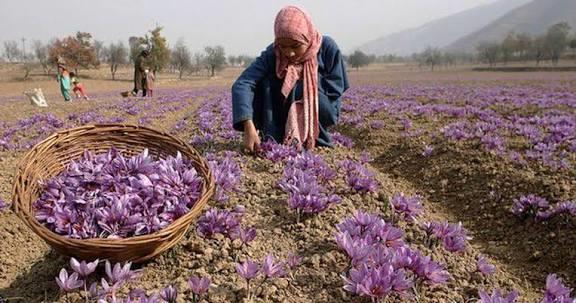
It informed the House that the declining trend has been “effectively halted”, with the area under cultivation stabilising at 3,715 hectares since 2010-11.
Data tabled by the government revealed that rejuvenated saffron areas recorded a productivity of 6.9 kg per hectare in 2023-24 and 5.02 kg per hectare in 2024-25 — a sharp recovery from the sub-2 kg figures recorded two decades ago.
Temporary dips in production during 2014-15, 2017-18 and 2018-19 were attributed to “external climatic factors”, including the devastating 2014 floods and prolonged dry spells.
In a strong rebuttal to charges that the Rs 411-crore mission had failed, the government highlighted significant gains made by saffron growers.
“Establishment of Saffron Park and IIKSTC has helped farmers realise enhanced prices, increasing from Rs 80,000 per kg to Rs 2,20,000 per kg during 2021-22,” the reply stated.
It further informed the House that scientific post-harvest processing methods introduced under the mission increased saffron stigma recovery from 22 grams to 28 grams per kg, while colour quality doubled from 8 per cent to 16 per cent through scientific drying techniques.
Responding to the legislator’s contention that none of the 129 borewells sanctioned under the mission are operational, the government said 85 borewells have been handed over to the Agriculture Department.
However, in a significant admission, it stated that efforts to construct the remaining 39 borewells “have faced significant obstacles”, with multiple tenders eliciting “consistently poor participation”.
The reply revealed that the executing agency has received a legal notice from the contractor citing “non-removal of site obstructions, non-payment for executed works, and lack of requisite administrative and police facilitation”.
In candid remarks, the government said: “The Agriculture Department has made concerted efforts to combat disruptive activities of undesirable elements among the saffron growing farmers which included damaging of sprinkler irrigation systems and borewells. The presence of real estate players and land grabbers poses a significant threat to the success of saffron cultivation in the area.”
The government also cited farmers’ reluctance to bear operational and maintenance expenses of community borewells as a reason for their poor utilisation. It noted that eight borewells — four each in Srinagar and Budgam — remain functional.
To break the deadlock, the District Development Commissioner, Pulwama, has constituted a committee headed by the Additional Deputy Commissioner, Awantipora, to review restoration and operationalisation of 16 borewells in Clusters I and II.
On corm rejuvenation, the government informed the House that out of the identified saffron area of 3,665 hectares in Kashmir division, 2,598.75 hectares have been brought under rejuvenation.
The remaining 1,116.25 hectares are proposed to be covered in a phased manner, with planting activities scheduled for July-August 2026-27. The government said awareness programmes have been initiated among saffron growers to ensure their active participation.
Significantly, the government stopped short of accepting the demand for an in-depth enquiry into the mission’s shortcomings.
“While monitoring and evaluating the activities carried out under the mission, it is clearly suggestive that majority of the objectives and outcomes have been achieved under the mission. However, a couple of objectives have remained incomplete due to various factors and the government is connecting with stakeholders to take all necessary steps to make this mission a success,” the reply stated.
The House was informed that saffron production in Jammu and Kashmir stood at 15.60 MT in 2023-24 and 17.33 MT in 2024-25, with export volumes touching 5.8 MT and 5.02 MT respectively. (KNS)