Aaqib Khan
Srinagar, Nov 19 : Three leopard cubs have been found dead in the Waripora area of Tangmarg in north Kashmir’s Baramulla district within two days, with preliminary post-mortem findings pointing towards suspected poisoning, Wildlife Department officials said on Thursday.
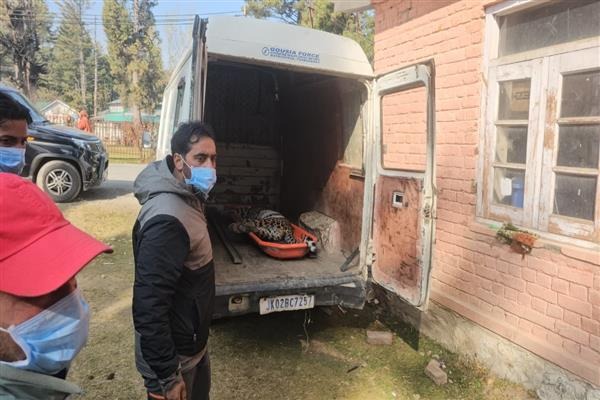
Range Officer Tangmarg, Shahid Sultan, said two female leopard cubs were recovered on November 17 after Police Station Kunzar informed the Wildlife Department about their deaths at around 4:30 pm.
“Immediately after receiving the information, I dispatched a team from our Tangmarg control room to recover the carcasses. Both cubs were brought to the control room and subsequently sent for post-mortem examination,” Sultan told KNS.
He said another call was received from Police Station Kunzar regarding a third leopard cub found dead in the same area.
“I personally visited the spot, recovered the carcass and brought it to our control room. The post-mortem examination was conducted the following morning,” he said.
According to Sultan, the three dead animals included two female cubs and one male cub, all recovered from the same locality.
He said preliminary examinations conducted by veterinary doctors had raised suspicion of poisoning, although the exact cause of death remained unconfirmed.
“The doctors have indicated suspected poisoning based on their initial examination. However, it would be premature to reach any conclusion until the final reports are received,” Sultan said.
He said the department had decided to conduct further forensic examinations to establish whether the deaths resulted from deliberate poisoning, consumption of contaminated prey or some other cause.
“Samples have been collected from all three carcasses and are being sent for forensic analysis. We want to establish the actual cause of death with certainty,” he said.
Sultan disclosed that preliminary examination of the stomach contents suggested the cubs might have consumed a dog before their deaths.
“The doctors indicated that the leopards may have consumed a dog. We have directed that the relevant samples also be examined to determine whether the animal carried any toxin or disease,” he said.
He said Wildlife Department teams had also inspected the surrounding area to look for possible poisoned bait or other evidence that could explain the deaths.
“We searched the entire area yesterday to ascertain whether any poisoned bait had been placed there and subsequently consumed by the leopards. So far, nothing of that nature has been recovered,” he said.
The Range Officer said veterinary examination had not revealed any visible injuries or external signs of assault on the carcasses.
He said the preliminary findings suggested possible toxic exposure, but laboratory confirmation was necessary before determining the circumstances surrounding the deaths.
“The matter is under investigation. Once the forensic and final post-mortem reports are available, we will share the findings,” Sultan said.
Meanwhile, responding to concerns over leopard movement in residential areas, Sultan said Wildlife Department teams were continuing night patrols in vulnerable locations and had installed cages following reports of sightings.
He said no fresh leopard movement had been confirmed in one of the areas where a recent attack had been reported, although field teams remained deployed.
Referring to the attack on a child, Sultan said the department had been patrolling the locality for several days and making efforts to locate and tranquilise the animal.
He said the incident occurred in an orchard away from the family’s residential area while the child had accompanied his mother, who was collecting twigs.
Sultan urged residents, particularly those living near orchards and forest areas, to exercise caution during early morning and evening hours when leopards are generally more active.
He advised parents not to leave children unattended in vulnerable areas and asked residents to avoid unnecessary movement after dark.
He also urged people to clear bushes and accumulated waste near residential houses, which could provide shelter or attract animals.
“Our teams are monitoring the situation and conducting regular patrols. Any further development will be communicated,” he said. (KNS)