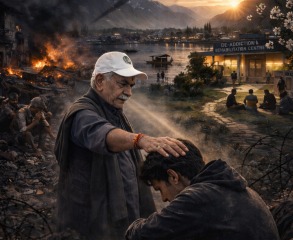
Jammu and Kashmir steps into a decisive phase as Manoj Sinha rolls out a 100-day anti-drug mission.Backed by tougher enforcement, financial crackdowns and a renewed focus on rehabilitation, the campaign marks a structured, system-wide effort to dismantle drug networks and safeguard the next generation. Sagar Firdous reports
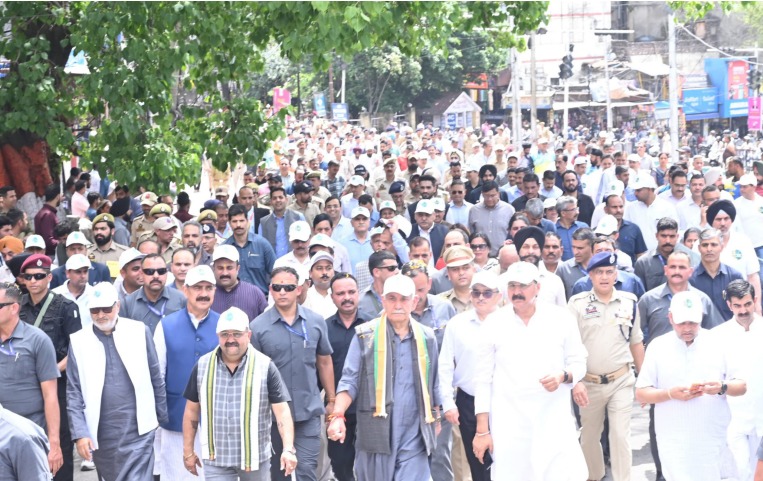
On April 11, 2026, the streets of Jammu were turned into a stage of messaging and resolve as Manoj Sinha stepped out to lead a padyatra, formally launching what the administration has described as a 100-day “Nasha Mukt Jammu and Kashmir Abhiyaan.” It was not merely a ceremonial walk. The optics were deliberate students, officials, uniformed personnel and citizens walking in step, signalling that the fight against drugs was no longer to remain confined to police stations or hospital wards, but was being recast as a collective societal battle.
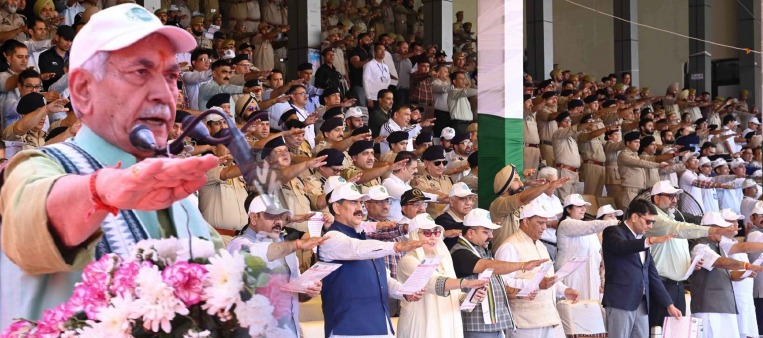
The timing of the campaign is rooted in a reality that has been steadily intensifying beneath official narratives. Over the past few years, enforcement agencies in Jammu and Kashmir have reported a consistent rise in drug seizures, arrests and trafficking networks, indicating that narcotics are no longer a peripheral issue but a deeply embedded ecosystem. What has alarmed policymakers is not just the scale but the demographic shift. Young men from both urban centres and remote rural belts are increasingly falling prey to heroin and synthetic drugs, replacing older, less destructive substances. Families speak in hushed tones of sons slipping into addiction, savings drained to sustain habits, and a growing sense of helplessness that cuts across class and geography. The drug crisis, once sporadic, now carries the contours of a social emergency.
Behind this surge lies a complex web of factors. Officials have repeatedly pointed to cross-border smuggling routes, alleging that narcotics are being pushed into the region as part of a larger destabilisation strategy. At the same time, economic vulnerabilities particularly have created fertile ground for substance abuse. Layered over this is a psychological dimension shaped by uncertainty and trauma, much of which remains unaddressed. The campaign, therefore, is not simply an anti-drug drive; it is an attempt to intervene in a multi-dimensional crisis that intersects public health, law enforcement and social stability.
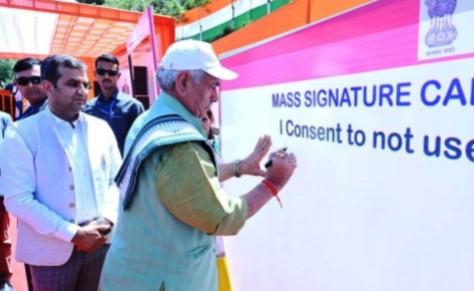
What distinguishes the current initiative from earlier efforts is the speed with which it has transitioned from symbolism to structure. Within days of its launch, the administration moved to align multiple departments under a coordinated framework. High-level review meetings were convened to ensure that police, health services, education departments and local units were operating in sync rather than in silos. Simultaneously, security forces intensified their operations against suspected peddlers and trafficking networks, signalling that enforcement would be central to the campaign’s early phase.
The most striking aspect, however, has been the introduction of what officials describe as “deterrent-heavy” measures. The administration has indicated that individuals involved in drug trafficking could face not only arrest but also the confiscation of property, freezing of bank accounts, cancellation of passports and even the suspension of official documents. These steps mark a significant escalation in the state’s approach, shifting the focus from merely arresting offenders to dismantling the financial and logistical backbone of the narcotics trade. By targeting the economic incentives that sustain drug networks, the administration appears to be attempting a systemic disruption rather than episodic crackdowns.
At the heart of the campaign lies a doctrine that the administration has articulated with clarity: the innocent must be protected, and the guilty must not be spared. This distinction between the addict and the trafficker is central to the campaign’s credibility. In practical terms, it translates into a dual strategy. On one hand, law enforcement agencies are being empowered to act decisively against drug networks. On the other, there is a parallel emphasis on treating addiction as a health issue, with calls for expanding rehabilitation services and fostering a more compassionate societal response toward those struggling with substance abuse. The administration has urged communities to move away from stigma and toward support, recognising that without reintegration, enforcement alone cannot resolve the crisis.
Another notable feature of the campaign is its embrace of digital platforms as tools of outreach and engagement. Law enforcement agencies have begun leveraging social media to disseminate information, provide helpline access and encourage citizens to report drug-related activities. This shift reflects an understanding that traditional awareness campaigns posters, seminars, official notices may no longer suffice in reaching a generation that consumes information primarily through digital channels. By entering these spaces, the campaign aims not only to inform but also to shape narratives around addiction, responsibility and recovery.
Yet, beyond policy and enforcement, the campaign carries an unmistakable political undertone. By framing drug abuse as a security concern linked to cross-border networks, the administration has broadened the discourse, situating narcotics within the larger framework of national security.
Ultimately, stripped of administrative language and political framing, the campaign is about the future of Kashmir’s youth. Each statistic cited in official briefings corresponds to individual lives, students who have dropped out, families pushed into financial distress, communities grappling with silent crises. The administration has cast this as a battle for the next generation, and in many ways, that is precisely what it is. Whether the “Nasha Mukt Jammu and Kashmir Abhiyaan” can alter the trajectory of that generation will determine if this moment is remembered as a decisive intervention or a missed opportunity.
For years, intelligence agencies and law enforcement officials have pointed to a pattern that goes beyond conventional crime. Narcotics entering Jammu and Kashmir are often traced back to cross-border routes, with heroin forming the backbone of the trade. The logic is strategic as much as economic. Drugs, officials argue, serve a dual purpose: they generate revenue and erode the social fabric, particularly among youth. This framing has gained renewed prominence under Manoj Sinha’s administration, where the drug menace is increasingly described not just as a criminal issue, but as a security threat.
The geography of Jammu and Kashmir makes enforcement uniquely challenging. Porous stretches along the Line of Control, difficult terrain and established smuggling corridors provide multiple entry points. Once inside, the network fragments into smaller, decentralised units. At the lowest level are local carriers and peddlers often young, expendable and easily replaceable. Above them sit coordinators who manage distribution across districts. At the top are financiers and handlers who rarely come into direct contact with the product, insulating themselves from risk while controlling the flow of money.
This layered structure is precisely why conventional policing has struggled to deliver lasting results. Arrests at the bottom of the chain create immediate visibility, but limited disruption. The network absorbs these losses and regenerates. What the current campaign attempts through financial crackdowns and asset seizures is to invert this approach, targeting the upper layers where the real power lies.
Early signals from the administration suggest a willingness to escalate. Investigative agencies have been encouraged to pursue financial trails alongside criminal cases, linking narcotics offences to money laundering and organised crime frameworks. Properties suspected to be acquired through drug money are being identified, and in some cases, seized. Bank accounts are under scrutiny. The message is clear: participation in the drug trade will carry consequences that extend beyond imprisonment.
Beyond enforcement, the campaign also intersects with a broader political narrative. By positioning the drug crisis within the framework of national security, the administration has effectively elevated it to a priority that commands resources and attention. This has advantages: it allows for stronger legal measures, greater coordination with central agencies and a more unified messaging strategy. But it also reshapes the discourse, potentially narrowing the space for alternative perspectives that emphasise public health, social welfare and long-term rehabilitation.
Amid these complexities, one of the most critical factors will be sustainability. Campaigns, by design, are finite. Networks, by contrast, are enduring. The 100-day timeline provides a framework for concentrated action, but the systems required to combat narcotics—intelligence gathering, financial tracking, rehabilitation infrastructure, community engagement—must operate continuously. The risk is that once the campaign period ends, momentum dissipates, allowing networks to regroup.
There is, however, an alternative possibility. If this succeeds in institutionalising its mechanisms, embedding coordination between agencies, strengthening legal processes, expanding rehabilitation services—it could mark a genuine turning point. The early emphasis on integration, rather than isolated action, suggests that the administration is aware of this challenge. Whether awareness translates into execution will determine the campaign’s legacy.
For Manoj Sinha, the stakes are both administrative and symbolic. Success would position the campaign as a model for tackling complex social-security challenges. Failure, or even partial success, would reinforce scepticism about the effectiveness of high-intensity drives in addressing deeply rooted issues.
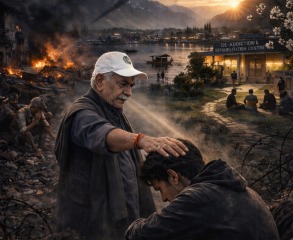
In the end, the battle against drugs in Jammu and Kashmir is not a single campaign, but a long war of attrition—against networks that adapt, against social conditions that enable addiction, and against institutional limitations that constrain response. The 100-day campaign is, at best, an opening offensive. Its outcome will depend on what follows.
The answer will not emerge in official briefings or progress reports. It will be written in recovery or relapse, in opportunity or loss across the lives of a generation.