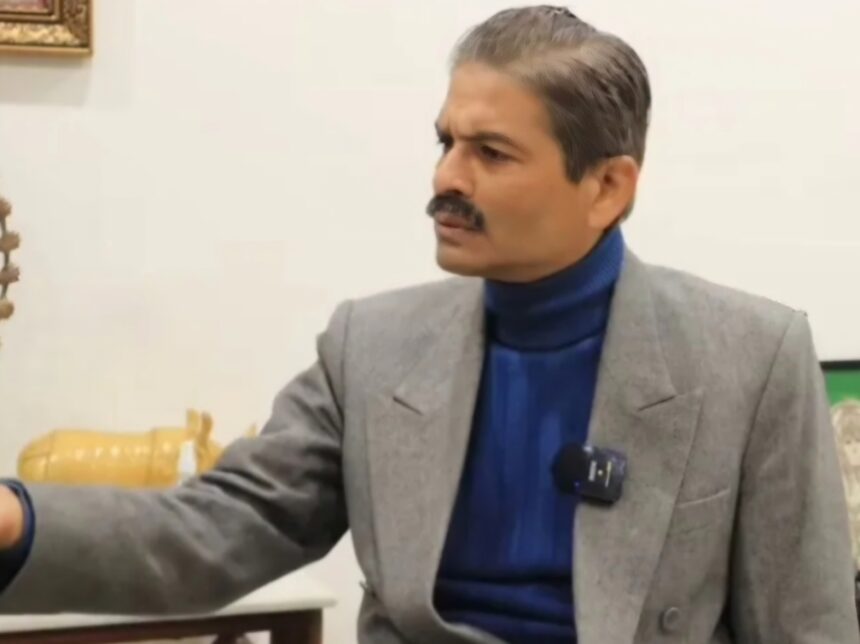
In an interview, former Jammu and Kashmir Director General of Police R.R. Swain revisits the most turbulent chapters of the conflict, interrogating the strategic, political and institutional choices that shaped its trajectory. From the fragility of the 1990s to the architecture of what he calls “white-collar terrorism,” Swain offers a hard-edged assessment of ecosystem enablers, systemic lapses and the imperative of ending duality to secure lasting peace in J&K.
Excerpts
Q: Do you remember the first time you were allotted the J&K cadre? What impression did that initial phase leave on you?
R.R. Swain: Yes, I remember it very clearly. It was the early 1990s. When we were in the academy, the situation in Jammu and Kashmir had already deteriorated. It was a phase marked by intense street violence and severe law-and-order challenges. The police force had become very weak from within. The number of terrorists operating at that time was very high, and the frequency of attacks and violence was extremely high.
In fact, when the Jammu and Kashmir cadre was announced, many officers reacted with disappointment. The moment J&K was named, there was a sense of dismay among many of us.
Q: Were you also disappointed when you came to know that you were being allotted the J&K cadre?
R.R. Swain: Before joining the academy, when I came to know that Jammu and Kashmir was one of the cadres, I went to meet one of our very senior former Directors General. He had earlier served in the J&K cadre and later moved to central deputation. I had never been to Jammu and Kashmir before. I knew very little about the place. The situation was tense, and naturally I wanted honest advice. I met him informally and asked him about the cadre, what it was like and what one should expect.
He told me something that stayed with me. He said that despite the violence, it was an excellent cadre. He said that if I was sincere and committed, Jammu and Kashmir would give me enough space to show that commitment. He also said that the people of J&K, at the end of the day, have a strong sense of judgment. They know who is sincere and who is not, and that recognition would be the biggest reward for an officer. After that conversation, I stopped thinking too much about it.
Q: Where were you posted initially, and what were your early assignments?
R.R. Swain: I was promoted while posted in Chennai. My Senior Superintendent of Police there was a doctor. By that time, the violence from Kashmir had started spilling over beyond the Valley. Police stations were being looted. One such police station in Chenani had been attacked and looted by a gang led by Farooq Ansari, a terrorist. I was given charge of that police station. Soon after that, I was posted to the mountains. I could not drive. I did not have resources. But I had spirit and passion. My first posting in Kashmir was in Srinagar, where I was posted as ASP, Kothibagh.
Q: How would you describe the security situation in Srinagar at that time?
R.R. Swain: At that time, law and order in Srinagar was extremely fragile. Kral Khud Police Station fell under Kothibagh. There were areas people refused to enter because firing was routine. You could not go into certain localities. Almost every other day there was firing, often in the middle of civilian areas. When I look back today, I realise that those were life-threatening conditions. They were physically dangerous in every sense. Officers of my generation in the Jammu and Kashmir cadre, my colleagues have seen violence from very close quarters. We did not observe it from a distance. We lived through it.
Q: In your assessment, when did Jammu province witness the most intense phase of terrorism?
R.R. Swain: In my opinion, while districts like Doda, Kishtwar were affected, the most intense phase of terrorism in Jammu province lasted nearly a decade, roughly between 1995 and 2005, even extending into 2006. I was posted as SP, Poonch, for nearly two years during that period. Those were extremely difficult times.
Q: When terrorism first reached Poonch, was there significant local involvement, or was it largely driven from across the border?
R.R. Swain: Poonch is a border district. At that time, there was no fencing. Unlike Kashmir, there was no winter closure because of snow. Infiltration was possible throughout the year.
Militants established camps along transit routes. For logistics, they cultivated a critical minimum support base among locals, often through intimidation. Initially, local involvement was marginal. But fear plays a powerful role. When people witness instant death, and when security forces are stretched thin, survival instincts take over. Even those who do not support terrorism begin making compromises to survive.
Q: Yet Poonch later produced strong resistance against terrorism. How do you see that transformation?
R.R. Swain: Poonch became one of the strongest fighters against terrorism. A large number of local boys joined the police and the Army and fought back with remarkable courage. There were many covert operations during that phase. Coordination with the Army improved significantly. That was when I truly understood the capabilities of Special Forces, their training, their tactics, their discipline. As police officers, we are trained mainly for law and order and a certain level of insurgency. But in places like Poonch, the enemy was trained and motivated very differently. That demanded a completely different tactical approach.
Q: What was the biggest operational challenge during that phase?
R.R. Swain: The biggest challenge was identification. Most of the terrorists were foreign. They had no local address, no family leverage and no social history. As police officers, we rely on the law, warrants, legal pressure and accountability. But these fighters had none of that. They were trained to kill and to get killed. In such situations, neutralisation becomes the only option. Add to this the difficult terrain, lack of roads and poor communication, and the operational environment became extremely complex.
Q: A democratic government was formed in 1996. Did political pressure begin to affect counter-terror operations after that?
R.R. Swain: I must be very candid. In the initial phase after the 1996 government was formed, I personally did not experience direct political pressure. There were no calls asking me to release someone. However, this changed later, particularly when electoral competition intensified.
Q: You said earlier that initially, after the 1996 democratic government came in, you did not experience direct political pressure. But later, something changed. Can you explain that phase in more detail?
R.R. Swain: Yes. I think it is important to be very precise here. When the first democratic government came in 1996, in the initial phase, I personally did not experience political interference of the kind people talk about today. There were no phone calls asking me to release someone, no direct instructions to dilute an operation. That phase was different.
However, as time passed and electoral politics began to take deeper roots again, particularly at the local level, things started changing. This was not an overnight change. It was gradual. But by around 1999–2000, a shift was clearly visible in the system.
Q: Where were you posted around that time, and how did you still sense this shift even if you were not always in the Valley?
R.R. Swain: Around that period, I moved from Poonch to Kathua, and later to Jammu. But you must understand one thing, even if you are not physically posted in the Valley, you are never disconnected from the larger security ecosystem. You meet colleagues regularly. You talk to them. You exchange operational experiences. You know what is happening. You know which operations are succeeding, which are being diluted, and why. Operations were still happening. Terrorists were still being killed. Movement was still taking place. People were travelling between Kashmir and Jammu. Even cross-border movement through routes like Wagah had begun after it was opened. But despite all this, a qualitative change was felt.
Q: What exactly was that change?
R.R. Swain: The change was this: the system increasingly focused on eliminating the terrorist, the man with the gun but avoided acting against the ecosystem that sustained terrorism.
There was a growing restraint, a hesitation, to go after the larger network: the recruiters, the facilitators, the financiers, the ideological sustainers.
That restraint, in my view, marked a turning point in Jammu and Kashmir’s overall anti-terror and anti-separatist operations.
Q: Are you suggesting that terrorism was being addressed tactically, but not strategically?
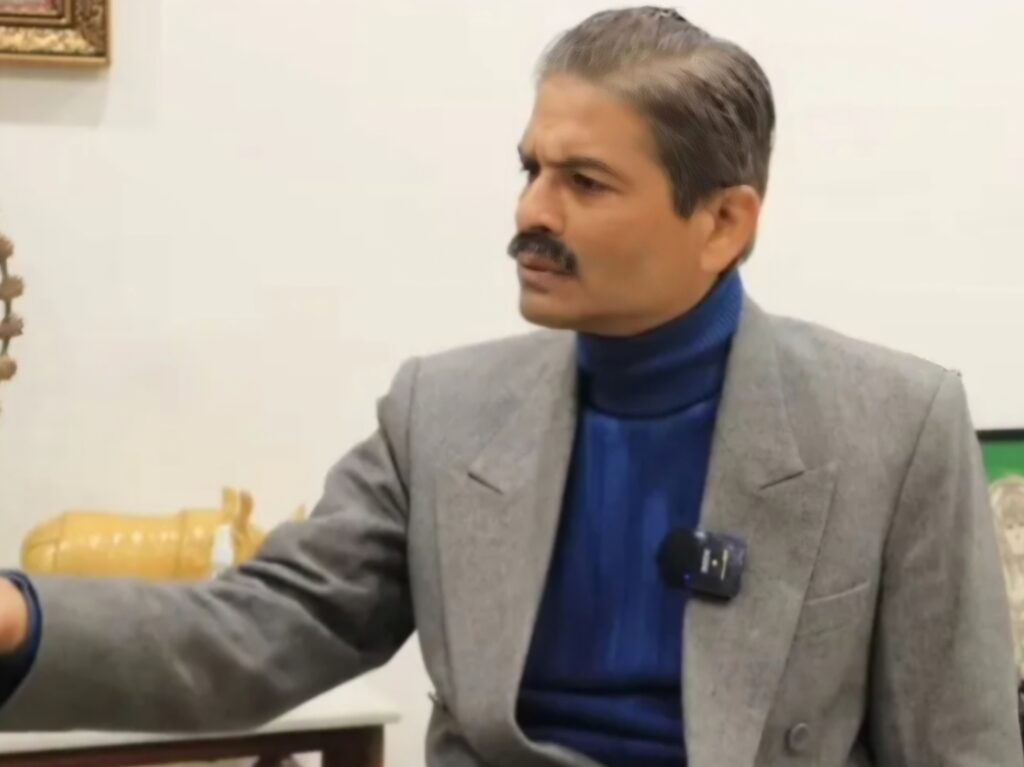
R.R. Swain: Exactly. You had a situation where operations were taking place and terrorists were being neutralised. But not enough attention was being paid to the fundamental questions:
Why is this individual getting recruited?
Who is allowing him to get recruited?
Who is sustaining that anger?
Who is providing logistics?
Who is funding it?
Who is giving ideological justification?
Without these elements, terrorism cannot survive. But the system became preoccupied with firefighting.
There is a fire in one house. You extinguish it. Then there is a fire in another house. Again, you extinguish it. But nobody is asking: who brought the kerosene, who lit the match, and why fires keep breaking out.
Q: Why does a system fall into this kind of firefighting mode?
R.R. Swain: Because firefighting consumes all your energy. As a young officer, your entire focus is on the immediate crisis. There is a firing incident. You rush there. There is another incident. You rush there.
You do not have the time, energy, or resources to step back and analyse how to prevent the fire from starting in the first place. This creates a vicious cycle and that cycle suits the enemy perfectly. The enemy wants you to remain pinned down, exhausted, reacting every day, so that you never get the time to dismantle the deeper structure.
Q: You have hinted that political considerations also played a role. Can you elaborate on that?
R.R. Swain: Yes, political considerations did begin to influence decisions over time. I am not saying this happened uniformly or everywhere. But broadly, as electoral competition intensified, particularly at the local level, there was increasing pressure to avoid actions that could upset certain constituencies.
This is where restraint started creeping in restraint not against violence, but restraint against dismantling the ecosystem. And this is dangerous. Because once you draw an artificial line that terrorists can be targeted, but the ecosystem cannot, you have already accepted partial defeat.
Q: Did this restraint ever translate into operational decisions on the ground?
R.R. Swain: Yes. And this is where it becomes uncomfortable to talk about specifics. There were instances and I am saying this responsibly where live operations were called off.
Q: Can you recall such an incident from your own experience?
R.R. Swain: Yes. I recall an incident from Kulgam, when I was posted there as District SP. There was a live operation underway. The area had been cordoned off. Terrorists were surrounded. The operation was progressing towards its logical conclusion. The operation was called off. I want to be very clear: I am saying this with responsibility. After that, those very terrorists moved around openly. In fact, they later participated in what were described as victory processions, riding motorcycles openly.
This is not hearsay. This is something I witnessed.
Q: Was the decision to call off such operations political?
R.R. Swain: Yes, political considerations did play a role in such decisions.
But let me also clarify something very important. The purpose of recalling these incidents is not to indulge in witch-hunting, nor to blacken individuals or political parties.That is not the objective.
Q: Then what is the objective of revisiting these moments?
R.R. Swain: The objective is to understand why this happens and how to ensure that it does not happen again.
Because every such decision has direct consequences for the people of Jammu and Kashmir. It affects not just security outcomes, but trust, morale, and the overall trajectory of the conflict.
If you do not diagnose the disease honestly, you cannot prescribe the right medicine.
Q: Many argue that reopening past actions or omissions will reopen wounds. How do you respond to that argument?
R.R. Swain: I understand that argument. But accountability matters because it creates deterrence. If omissions and commissions are never examined, then the system internalises the lesson that there is no cost for such decisions. And once that happens, repetition is inevitable. At the same time, this must not become selective targeting or political vendetta. The correct approach is institutional, identify where the system failed, correct it, and ensure that those conditions do not recur.
Q: What happens if such systemic failures are allowed to repeat?
R.R. Swain: The outcome is predictable. You will again see terrorism. You will again see recruitment. You will again see killings and beyond deaths, you will again see destruction of the economy, education, governance, and social fabric exactly what Jammu and Kashmir has already suffered. History does not repeat itself by accident. It repeats itself when lessons are not learnt.
Q: Was there also a belief within the system that the conflict could only be “managed”, not conclusively resolved?
R.R. Swain: Yes. That belief did exist.
There was a school of thought which said: separatists will remain, semi-separatists will remain, sympathy will remain. Sometimes it will go up, sometimes it will come down, but it cannot be resolved. Another view was that Pakistan is a geographical reality and therefore nothing decisive can be done.
Q: As a J&K cadre officer, how did you view that thinking?
R.R. Swain: Those of us who belong to the Jammu and Kashmir cadre see this very differently. We lead local boys. They have families. They have children. The success or failure of this battle affects them directly and permanently. Other elements of the security architecture may come for fixed tenures. They contribute and leave. But the J&K Police fights this battle 24×7. If the conflict simmers, they bear the maximum collateral damage. Slow fires burn them the most. That is why I say very clearly: a comprehensive and decisive defeat of Pakistan’s proxy war in Kashmir is in the biggest interest of the people of Jammu and Kashmir and the J&K Police.
Q: Some people argue that speaking of “decisive defeat” is emotional or unrealistic. How do you respond?
R.R. Swain: I strongly disagree.
I believe I am thinking both with the head and the heart. A decisive defeat is possible if we set our own house in order irrespective of what Pakistan does.
If we assume that defeat is impossible and allow the problem to simmer, then we are condemning ourselves to endless instability.
Q: You have also argued that dignity is not connected with Article 370. Why do you say that?
R.R. Swain: I find it very strange when dignity is linked exclusively with Article 370. India is a federal entity. Tamil Nadu, Odisha, Telangana none of them had Article 370, yet they command enormous respect within the Union.
Respect comes from financial viability.
From investment. From law and order. From governance. There were times when people were afraid to even travel to Noida or Gurgaon because of law-and-order issues. Investment follows stability. Dignity, self-respect and gravitas are not derived from constitutional exceptions alone.
Q: So, in your view, what should Jammu and Kashmir aspire to?
R.R. Swain: It should aspire to normalcy — real normalcy. Where politics is fought on governance. Where businesses operate without fear. Where children go to school without anxiety. Where professionals work without intimidation.
That is what brings back glory to a place.
Q: Before we move ahead, let me ask you this, do you believe that separatist influence had created a parallel system of authority in Kashmir?
R.R. Swain: I would phrase it as a parallel influence system, deeply pervasive. Foreign countries treat external interference in elections as an existential threat to democracy. Even narrative interference through social media is seen as an assault. In Jammu and Kashmir, this influence was operating openly prior to 2019. It has reduced substantially since then, but it has not been completely wiped out.
And unless one acknowledges the depth of the problem, how does one change it?
Q: Can you give an example that illustrates how deep this influence ran?
R.R. Swain: There are countless anecdotes. I recall a case where a man from Anantnag had his wife, a teacher, promoted to principal and posted to Kupwara. He was struggling to get the posting changed to a nearer place.
After exhausting all official channels, someone told him: “Gilani sahab ke paas jaana padega.” He went. A chit was written. That chit travelled faster than any official file. Doors opened. Meetings were interrupted. Orders were reversed.
Now ask yourself, what bigger proof do you need? If someone thanks an authority after elections, despite having no constitutional power, what does that tell you?
Q: So, would it be fair to say that Pakistan exercised substantive influence prior to 2019?
R.R. Swain: Yes. Substantive influence.
Not total control but significant influence. It has degraded seriously now. But degradation is not elimination.
And that is why complacency is dangerous.
Q: You opened another sensitive chapter when you spoke about government jobs being given to relatives of terror commanders and separatist leaders. How widespread was this, and how did you view it?
R.R. Swain: This is one example that illustrates how convoluted our thinking had become. A number of individuals were given government employment on the logic that they were “victims” that they were children or relatives of terrorists or separatist leaders. The justification was that they had suffered because of conflict. Now, let us be very clear. Situations can be complex. Some people may have genuinely suffered because they were at the wrong place at the wrong time. But in many cases, the linkage with the adversary of the Indian state was very clear and very patent.
The question is simple: if you incentivise something, how do you expect it to stop?
Q: Critics argue that denying employment to such families amounts to collective punishment. How do you respond to that?
R.R. Swain: This is where logic becomes dangerously inverted.
Nobody is saying that such individuals should be jailed without evidence. Nobody is stopping them from earning a livelihood, opening a shop, doing business, or pursuing a private profession. But public employment is not a matter of right. When you bring someone into public service, you are opening the state’s assets, systems and vulnerabilities to them. You are sending a message. If you are rewarding someone directly or indirectly without ensuring a genuine change of heart, you are incentivising the very ecosystem you claim to oppose.
Q: You often say that in security matters, the benefit of doubt must go to the state, not the individual. Can you explain that principle?
R.R. Swain: In criminal jurisprudence, the benefit of doubt goes to the accused.
But in security decisions, the benefit of doubt must go to society and the state.
You cannot risk collective security because of individual ambiguity.
If there is reasonable doubt that someone could be vulnerable or susceptible, the system must protect itself. This is standard practice worldwide. It is not persecution. It is prudence.
Q: During your tenure, you reopened many old cases, FIRs that were either not registered or not investigated. What did you discover?
R.R. Swain: Resources were limited. But the resoluteness of the Government of India made a difference. Investigations were revived. Old FIRs were examined. New ones were registered where required. If we speak at a macro level, we must confront numbers uncomfortable numbers.
Q: Let us talk about those numbers. What are the actual death figures since 1989?
R.R. Swain: Approximately 47,000 deaths since 1989. This is not a casual estimate. This is broadly accurate.
Out of these:
• 6,000 to 7,000 are security forces, including police and the Army
• Around 22,000 are terrorists — and I say this with confidence; there is no dispute about their identity
• Nearly 12,000 are civilians killed by terrorists
Q: Twelve thousand civilians killed by terrorists yet accountability is rarely discussed. Why?
R.R. Swain: Exactly. Twelve thousand civilians were killed by terrorists. Who recruited those terrorists? Who funded them? Who provided logistics? Who enabled them? How many of those cases reached their logical conclusion in the rule of law?
This is where the failure is systemic.
Q: How did intelligence agencies align on this approach?
R.R. Swain: There was broad agreement across agencies and leadership including the Army and intelligence services that fighting only the gunman was insufficient. Breaking the cycle of violence required dismantling finance, narrative, recruitment and political shielding. That is what white-collar terrorism represented.
Q: In summary, what was the single biggest institutional failure you identified?
R.R. Swain: The failure to connect rule of law with security outcomes.
You cannot fight terrorism only with weapons. You must fight it with investigation, accountability, and institutional courage.
Courtesy: The Straight Line