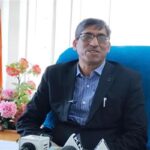
Mir Altaf
In India, food is never just sustenance—it is memory, it is culture, it is identity. From the spice-laden shores of Kerala to the millet fields of Rajasthan, from Kashmiri Kehwa warming snow-clad valleys to bamboo shoots steaming in the North-East, every region serves a story on its plate. Within this mosaic, tribal cuisines are the taste of forests, the rhythm of pastoral life, and the quiet resilience of communities that have guarded their traditions for centuries.
The National Tribal Food Festival, held in Udaipur, Rajasthan, from 17th–19th September 2025, provided a platform to celebrate this diversity. The festival was organized by the Tribal Research Institute, Udaipur, under the aegis of the Department of Tribal Affairs, Government of Rajasthan, as part of the Janjatiya Gaurav Diwas commemorations marking the 150th birth anniversary of Bhagwan Birsa Munda. More than a food fair, it was a meeting ground that provided tribal communities with extensive exposure, opportunities for livelihood, and a chance for inter-state interaction. The festival witnessed the participation of tribal culinary artists from Chhattisgarh, Madhya Pradesh, Gujarat, Maharashtra, Dadra & Nagar Haveli, Jammu & Kashmir, and several districts of Rajasthan—reinforcing the spirit of national integration, where diverse traditions blended into the broader mosaic of India.

The Delegation of Tribal Culinary Artists from Jammu & Kashmir: Preserving and Showcasing Gujjar Traditions.The delegation from Jammu & Kashmir, representing the rich heritage of the Gujjar community, was a standout presence at the festival, captivating attendees not only with their cuisine but also as living ambassadors of their traditions. The culinary artists were nominated and facilitated by the Tribal Affairs Department of J&K Government.
The participation of the delegation was a multi-sensory experience that went far beyond taste. The culinary artists, dressed in their distinctive traditional Gujjar attire, presented a visible and powerful demonstration of their culture. This sartorial elegance added a layer of authenticity and visual storytelling, transforming their stall into a vibrant cultural outpost of Kashmir in the heart of Udaipur. Among its members was Shahida Khanam, a young tribal girl from Aragam village in District Bandipora, who has emerged as a symbol of grassroots cultural revival.
Over the past few years, Shahida has relentlessly worked to preserve Gujjar traditions, establishing a tribal museum in Aragam that houses antiques, artifacts, and everyday objects of Gujjar heritage. Her efforts have been widely acknowledged as a model of community-led cultural conservation.
At Udaipur, the J&K delegation showcased Kunji and Murkan (A local forest herbal produce cooked as a vegetable and traditionally taken with rice/roti by the Gujjar and Bakarwal community), along with the iconic Kehwa (a traditional green tea preparation from Kashmir, infused with spices, almonds, and saffron), served in a traditional Samavaar. These cuisines received overwhelming appreciation. The overall presentation was holistic—where food and attire converged to make a powerful statement that “what was once confined to the domestic kitchens and highland pastures of Kashmir is now confidently positioned within the national cultural and economic landscape.”
Governance and Cultural Economy
From a governance perspective, the Udaipur festival demonstrated the impact of proactive initiatives by the Ministry of Tribal Affairs, Government of India, supported by State/UT-level Tribal Affairs Departments, towards cultural empowerment. Historically, tribal heritage was often treated as folkloric. Today, it is increasingly framed as a dynamic economic and cultural resource, capable of contributing to tourism, entrepreneurship, and national soft power.
Participation in festivals across regions allows communities to gain visibility, develop cross-cultural linkages, and access markets that were previously inaccessible. This reflects a broader developmental approach: integrating tribal economies into the national mainstream without diluting their distinct identities.
The Way Forward: From Celebration to Sustainable Empowerment
The Udaipur festival was a success in so many ways. It demonstrated a transformative policy approach where tribal culture is recognized as a dynamic engine for development. The way forward now is to build scalable platforms for tribal artisans, integrate their cuisines into the national culinary tapestry, and foster tourism that directly benefits communities.
On the nation’s journey to becoming a Viksit Bharat by 2047, the Udaipur festival offers a crucial lesson: modernization gains its soul from cultural roots. Tribal heritage must not be merely remembered—it must be actively lived, widely shared, and joyfully celebrated. Let festivities around Tribal Culture and Cuisines Continue.
Mir Altaf is a Kashmir based educator & writer and can be reached at miraltaf966@gmail.com