Two years after four members of a family died while fetching drinking water, Rajpora continues to wait, for rehabilitation, accountability and a promise that should never have remained unfulfilled.
Tarique Raheem
Every village has a memory it wishes it could forget.
For Rajpora, a village nestled in north Kashmir’s Handwara sub-district, that memory returns unfailingly with every passing July. It returns not through speeches or anniversaries, but through four graves standing silently beside one another in the village cemetery. Beneath them lie Ghulam Rasool Bhat, Tahir Ahmad Bhat, Shabnam Bhat and Rifat Bhat, four members of one family whose lives ended while doing something that should never have required risking life itself: fetching drinking water.
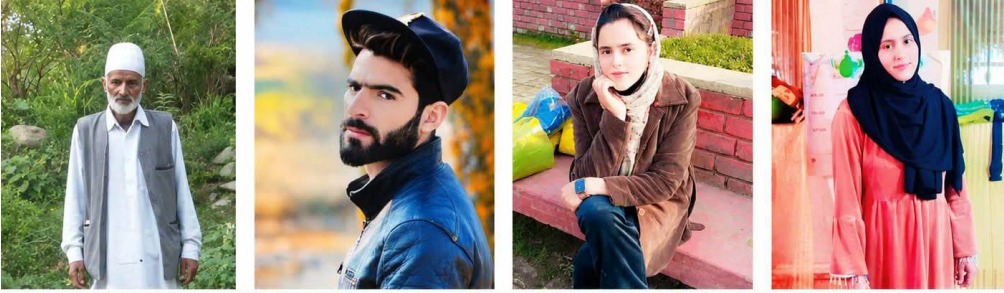
Two years have passed since that tragic afternoon. Time has softened neither the grief of the surviving family nor the questions the tragedy left behind. If anything, the silence surrounding those questions has made them even louder.
The accident was not merely a road mishap. It was the culmination of years of inadequate public infrastructure that forced villagers to depend on a hilltop spring several kilometres away for drinking water. The family had set out on what had become a routine journey, returning in a load carrier with containers filled from the spring. They never made it home.
For a brief moment, Rajpora became a symbol of a larger failure, the painful contradiction of a region where scientific advancement and digital governance coexist with villages still struggling to secure safe drinking water. The tragedy prompted official visits, political assurances, public sympathy and promises of lasting intervention.
Two years later, however, Rajpora continues to wait.

For the people of Rajpora, the deaths of the four family members were never viewed as an isolated accident. They represented the human cost of a problem that had existed long before the tragedy and, according to residents, continues to persist even today.
Residents told The Kashmir Magazine that the village still lacks a dedicated drinking water supply scheme capable of meeting its requirements. Instead, it depends largely on an extension of an existing scheme that provides water on a rotational basis and often falls short of demand.
They also point to a borewell project initiated nearly a decade ago, saying it remains far from delivering the reliable service that was once promised.
For many villagers, the irony remains difficult to accept. Access to clean drinking water is among the most basic public services expected from any administration. Yet in Rajpora, it continues to be accompanied by uncertainty.
Inside the Bhat household, life has been divided into two chapters, before the accident and after it.
The immediate financial assistance announced by the administration offered temporary relief during the family’s darkest days. But grief cannot be measured in compensation alone.
The surviving family members, including Jana Begum, Asmat Jan, now pursuing her final year of education, and Arshid Ahmad, a Class XI student, continue to navigate a future permanently altered by the loss of four loved ones.
Their demand for compassionate appointment for an eligible family member remains unresolved. With limited sources of income and continuing responsibilities, the family says rehabilitation remains incomplete.
For them, the tragedy did not end with the funerals.
It simply changed form.
The immediate aftermath of the tragedy witnessed an outpouring of public emotion.
Political leaders visited the bereaved family. Officials announced relief measures. Public representatives expressed solidarity. Assurances of rehabilitation, employment and long-term support followed.
According to the family, however, many of those commitments remain unrealised.
Among the promises, they recall announcements of financial assistance through MP funds, sponsorship for surviving children and employment support made during visits by political leaders. Two years later, they say, little has materialised.
More painful than unfulfilled promises, they add, has been the gradual disappearance of public attention.
Once the cameras left, so did many of those who had pledged support.
For many residents, compensation addressed only the immediate consequences of the tragedy. It did not answer the larger institutional questions.
“Four people lost their lives while collecting drinking water,” says local journalist Syed Imtiyaz.
“Such a tragedy should have triggered a comprehensive review of why families were compelled to undertake such dangerous journeys in the first place. Accountability is not about punishment alone. It is about ensuring that institutional failures are identified and corrected before another family suffers the same fate.”
His concerns are echoed by social activist and advocate Mir Imran.
“The administration deserves appreciation for responding immediately after the accident,” he says. “But justice cannot end with ex gratia relief. Justice also means completing permanent infrastructure, rehabilitating the surviving family and ensuring that lessons are learnt from what happened.”
According to him, tragedies of this nature should compel systemic reform rather than temporary attention.
Across much of the country, discussions around development often revolve around highways, smart cities and digital services.
Rajpora measures development differently.
Here, development means a functioning water supply.
It means parents no longer worrying about journeys to distant springs.
It means no child losing a parent because a village lacked access to a basic necessity.
For residents, the tragedy exposed the distance that can still exist between policy announcements and everyday reality.
Assistant Executive Engineer, Jal Shakti Department, Division Handwara, Adnan Ashraf, acknowledged that the village currently receives water on a rotational basis.
He said a reservoir has now been constructed for Rajpora and expressed hope that it would soon be commissioned, after which residents are expected to receive uninterrupted drinking water.
Asked why the project had taken more than two years to reach this stage, he cited financial constraints.
For villagers, however, explanations have gradually lost significance.
What they seek now are visible results.
It was about the price an ordinary family paid for an extraordinary failure.
And two years later, Rajpora is still waiting.