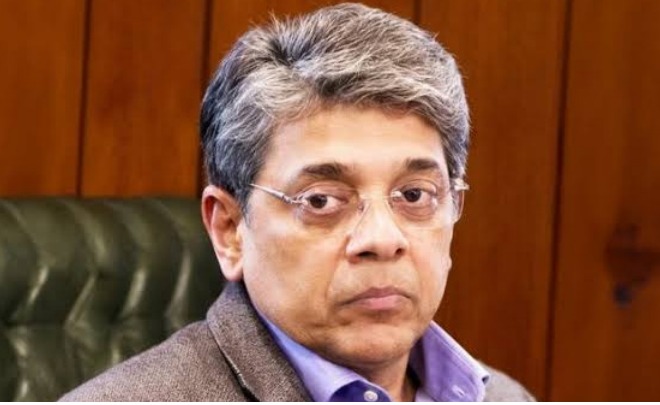
Aaqib Khan
The appointment of Mahesh Dixit as Director of the Intelligence Bureau (IB) places one of India’s most experienced intelligence professionals at the helm of the country’s oldest and most important internal intelligence agency. A 1993-batch IPS officer of the erstwhile Andhra Pradesh cadre, Dixit succeeds at a time when India’s security establishment is dealing with an increasingly complex mix of conventional and emerging threats, including terrorism, cross-border infiltration, cyber-enabled crime, radicalisation and organised criminal networks.
For Jammu and Kashmir, however, the appointment carries a significance beyond administrative elevation. Dixit spent a considerable part of his intelligence career in the Union Territory, serving during two distinct phases of its security environment. His familiarity with the region, its institutions and the operational challenges faced by intelligence agencies has made him one of the few senior officers to have witnessed Kashmir’s evolving security landscape from close quarters over an extended period.
Unlike officers in uniform who frequently interact with the public, Intelligence Bureau officials operate almost entirely outside the public eye. Their work rarely attracts headlines and their achievements are often measured by incidents that never occur rather than operations that become public. Within that institutional culture, Mahesh Dixit built a reputation as a field officer who preferred operational work over visibility and coordination over publicity.
His elevation to the country’s top intelligence post follows nearly three decades of service in the Intelligence Bureau. Before taking charge as Director, he served as Special Director, the second-highest position in the organisation, where he was associated with intelligence assessment, inter-agency coordination and operational planning on matters relating to national security. His appointment therefore represents continuity within the organisation rather than a departure from its existing approach.
For security observers, the significance of Dixit’s appointment also lies in the nature of the challenges confronting the Intelligence Bureau today. Internal security is no longer confined to tracking militant organisations or monitoring conventional threats. Intelligence agencies today operate in an environment shaped by encrypted communication platforms, drone-assisted cross-border smuggling, online radicalisation, financial networks linked to terrorism and rapidly evolving cyber threats. Managing such challenges requires operational experience, institutional memory and coordination across multiple security agencies, areas in which Dixit has worked throughout his career.
Among the various assignments during his career, Mahesh Dixit’s association with Jammu and Kashmir remains one of the most significant. He served in the Union Territory during two different periods, each representing a distinct phase in the region’s security environment.
His first tenure, between 2009 and 2012, coincided with a period marked by frequent street protests, militant violence and heightened security concerns. Intelligence gathering during those years required constant coordination between multiple security agencies as well as continuous assessment of rapidly changing ground situations.
Nearly a decade later, Dixit returned to Jammu and Kashmir as head of the Subsidiary Intelligence Bureau (SIB), Srinagar. His second tenure came in the aftermath of the constitutional changes of August 2019, when the security landscape had entered a new phase. The challenges before intelligence agencies had expanded beyond conventional militancy to include hybrid militants, targeted civilian killings, cross-border infiltration, drone activity and attempts to radicalise vulnerable sections of society through digital platforms.
During this period, the Intelligence Bureau played a key role in coordinating intelligence inputs with the Jammu and Kashmir Police, Army, Central Armed Police Forces and other security agencies. Officers familiar with the functioning of the security establishment say that intelligence sharing and inter-agency coordination assumed even greater importance as operational challenges evolved.
Although Intelligence Bureau officers rarely discuss operational details publicly, colleagues describe Dixit’s tenure in Kashmir as one characterised by systematic field assessment, regular coordination meetings and emphasis on actionable intelligence. These are qualities that have traditionally been valued within India’s intelligence framework.
Unlike many senior police officers whose careers unfold largely in the public domain, Mahesh Dixit’s professional journey has been defined by assignments that rarely attract public attention. Intelligence work demands discretion, patience and continuity—qualities that often remain invisible outside official circles but are central to the functioning of India’s internal security apparatus.
A 1993-batch IPS officer of the erstwhile Andhra Pradesh cadre, Dixit began his policing career in the conventional law enforcement system before moving to the Intelligence Bureau at an early stage. Over the next three decades, he held assignments across different parts of the country, including the Northeast, eastern India, southern India and New Delhi. These postings exposed him to a wide spectrum of security challenges ranging from insurgency and organised crime to counter-intelligence and internal security.
Within the Intelligence Bureau, officers are expected to develop expertise not only in intelligence collection but also in analysing information, assessing threats and coordinating with multiple agencies. Unlike conventional policing, where outcomes are often visible through arrests or investigations, intelligence work is preventive in nature. The objective is to detect threats before they materialise, enabling governments and security agencies to respond in time.
Those who have worked with Dixit describe him as an officer who preferred institutional processes over individual publicity. Throughout his career, he maintained a low public profile, consistent with the professional culture of the Intelligence Bureau, where operational secrecy remains fundamental to effective functioning.
His experience across different regions also provided exposure to varying security environments. Assignments in the Northeast required understanding insurgency-related challenges, while later responsibilities in metropolitan centres involved issues linked to internal security, intelligence coordination and strategic assessment. These experiences collectively broadened his understanding of India’s evolving security landscape long before he returned to Jammu and Kashmir.
By the time he assumed charge of the Subsidiary Intelligence Bureau in Srinagar during his second tenure in the Union Territory, Dixit had already accumulated decades of operational experience. His responsibilities extended beyond intelligence gathering to supervising coordination between multiple agencies engaged in counter-terrorism and internal security operations across Jammu, Kashmir and Ladakh.
His subsequent elevation as Special Director of the Intelligence Bureau placed him among the organisation’s senior-most officers, responsible for assisting in policy formulation, operational planning and nationwide intelligence coordination. The appointment also provided him with direct exposure to emerging security challenges confronting the country at the national level, ranging from cross-border terrorism and espionage to cyber-enabled threats and organised criminal networks.
For observers of India’s security establishment, Dixit’s appointment as Director therefore represents the culmination of a career shaped largely by field assignments rather than administrative postings. His progression through the Intelligence Bureau reflects the organisation’s long-standing preference for officers who combine operational experience with institutional continuity.
The Intelligence Bureau occupies a unique position within India’s security architecture. Established in 1887, it is among the world’s oldest intelligence organisations and remains the country’s principal domestic intelligence agency. Unlike investigative agencies, the Bureau functions primarily as an intelligence-gathering and assessment organisation, providing inputs to the Government of India on issues relating to internal security, terrorism, extremism, espionage, organised crime and other emerging threats.
Within India’s security establishment, Jammu and Kashmir has long been regarded as one of the country’s most demanding operational assignments. The region presents a security environment where intelligence work extends beyond monitoring militant activity. Officers posted here are required to understand a constantly evolving landscape shaped by cross-border infiltration, local recruitment into militant ranks, radicalisation, narco-terror financing, drone-based smuggling, cyber propaganda and the complex interaction between security measures and civilian life.
For intelligence officers, Kashmir offers exposure to almost every dimension of contemporary internal security. Information gathered from the ground often requires immediate verification, rapid dissemination and close coordination among multiple agencies. Unlike routine law enforcement, intelligence operations in the region depend on continuous assessment of changing situations, where even small developments can carry wider security implications.
During Mahesh Dixit’s tenure in Jammu and Kashmir, the security environment underwent significant transformation. His first assignment came during a period marked by frequent public unrest and conventional militant activity. When he returned years later, the nature of the challenge had changed considerably. Security agencies were increasingly dealing with hybrid militancy, targeted civilian killings, drone-assisted smuggling across the Line of Control and the growing use of encrypted digital platforms by terrorist organisations.
These changes demanded corresponding shifts in intelligence operations. Traditional human intelligence remained important, but technological surveillance, financial intelligence, cyber monitoring and inter-agency coordination assumed greater significance than ever before. Officers serving in such an environment were required to constantly adapt to changing methods adopted by hostile groups.
Security experts frequently point out that Jammu and Kashmir has often influenced the evolution of India’s counter-terrorism architecture. Many operational practices now followed elsewhere in the country—including intelligence sharing, multi-agency coordination and integrated security planning—were refined through years of experience in the Union Territory. Officers who have served in Kashmir therefore carry with them not only operational knowledge but also practical experience of managing complex security situations involving multiple stakeholders.