For 67 years, Jammu and Kashmir chased a dream on the margins of Indian cricket. In 2026, that dream became history as the team lifted the Ranji Trophy, ending decades of struggle and signalling the rise of a new cricketing force from the Himalayan region.Lone Saju Reports
For decades, the story of cricket in Jammu and Kashmir felt like a long winter. Every year the Ranji Trophy would arrive, and every year the team from the Himalayan region would appear briefly in scorecards before disappearing again. Victories were rare, expectations modest and infrastructure fragile. The Valley produced passion for cricket in abundance, but the ecosystem required to nurture it seemed perpetually out of reach.
Then, in February 2026, something remarkable happened. After 67 years in India’s premier domestic competition, Jammu and Kashmir lifted the Ranji Trophy for the first time, defeating Karnataka in the final through a decisive first-innings lead.
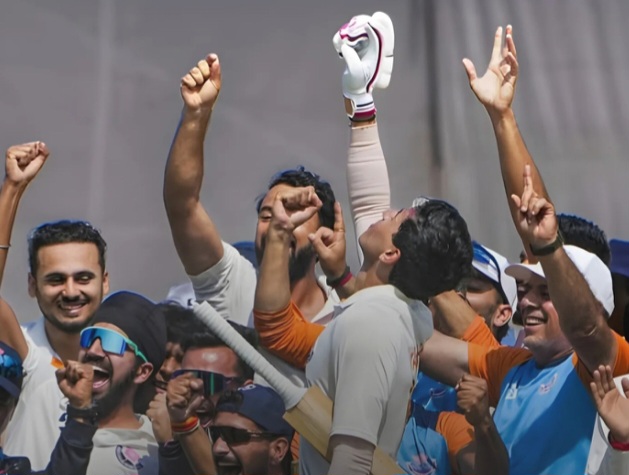
It was a victory that resonated far beyond the boundaries of a cricket field. For Indian cricket, it marked the rise of a new champion from a region long considered peripheral to the sport’s traditional centres of power. For Jammu and Kashmir, it symbolised something deeper: a moment when persistence, talent and belief finally converged.
The victory was not sudden. It was the culmination of a journey that began nearly seven decades earlier.
Jammu and Kashmir first entered the Ranji Trophy in the 1959–60 season, becoming one of the youngest teams in India’s domestic circuit. But entry into the tournament did not mean immediate success.
For much of its early history, the team struggled against stronger, better-resourced opponents. In the decades that followed its debut, victories were few and far between.
The team’s first Ranji Trophy win did not arrive until the 1982–83 season, when J&K defeated Services by four wickets. That statistic alone tells a powerful story: it took more than two decades for the side to register its first victory.
Between the late twentieth century and the early 2000s, Jammu and Kashmir remained one of the least successful teams in the competition. The reasons were numerous: geographical isolation, weak infrastructure, limited exposure and political instability that frequently disrupted sporting activities.
Cricket in the region existed more as a passion than a professional pathway.
To understand the scale of the 2026 achievement, one must understand the environment in which cricket developed in Jammu and Kashmir. During the 1990s and early 2000s, conflict and instability frequently disrupted tournaments, leaving stadiums empty and infrastructure underdeveloped.
Many young cricketers practised on improvised grounds and travelled long distances for matches. Talent existed, often in abundance, but opportunity did not. Unlike players from established cricketing states like Mumbai, Karnataka or Delhi, young cricketers in Jammu and Kashmir had limited access to coaching academies, high-quality pitches or consistent domestic competition.
Yet cricket survived.
Across towns like Srinagar, Sopore, Anantnag and Jammu, local tournaments continued to nurture young talent. In narrow lanes and open fields, young boys played with the dream that one day the region would produce cricketers capable of competing with India’s best.
The turning point in Jammu and Kashmir’s cricket story came with the emergence of a new generation of players in the early 2000s.
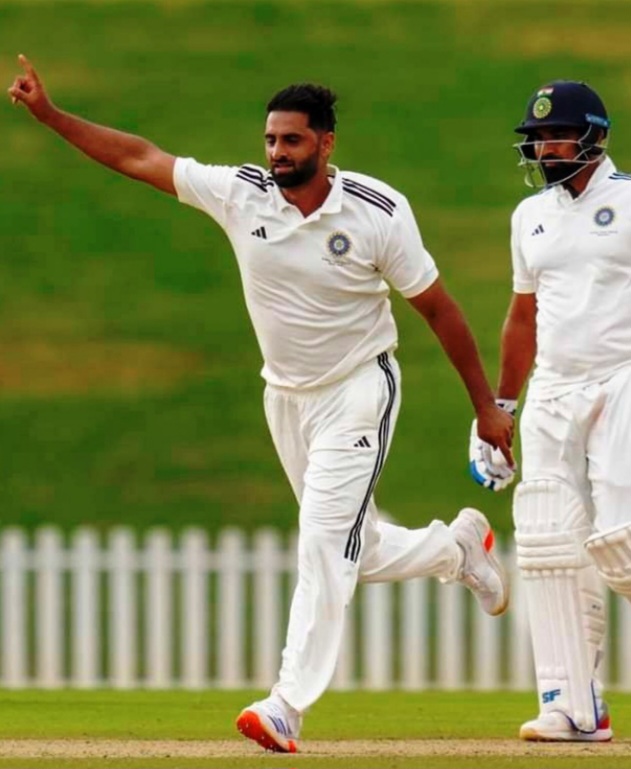
Among them was Parvez Rasool, a talented all-rounder from Bijbehara who would later become the first cricketer from Jammu and Kashmir to represent India in international cricket.
Rasool’s rise transformed perceptions about cricket from the region. For young players across the Valley, his success provided something they had rarely seen before, proof that the journey from Kashmir’s local grounds to the national stage was possible.
Rasool went on to lead the J&K team in domestic cricket and became one of the most influential figures in the region’s cricket development. His leadership coincided with a gradual improvement in the team’s performances.
The Ranji Trophy season of 2013–14 marked one of the earliest indications that Jammu and Kashmir’s cricketing fortunes might be changing. After more than a decade outside the knockout stages, the team qualified for the Ranji Trophy quarterfinals, securing four outright victories during the league stage.
The qualification ended a long drought, the team’s previous appearance in the knockout stage had come in the 2001–02 season.
Although J&K did not progress further that year, the achievement showed the team was no longer merely participating in the competition, it was beginning to compete.
If one moment captured the changing trajectory of Jammu and Kashmir cricket, it came during the 2014–15 Ranji Trophy season. At Mumbai’s iconic Wankhede Stadium, the J&K team stunned the domestic giants with a remarkable victory.
For a side that had spent decades battling on the margins of the tournament, defeating Mumbai, historically one of India’s most successful Ranji teams, carried enormous symbolic weight.
The win demonstrated that the gap between Jammu and Kashmir and the country’s established cricketing centres was beginning to narrow.
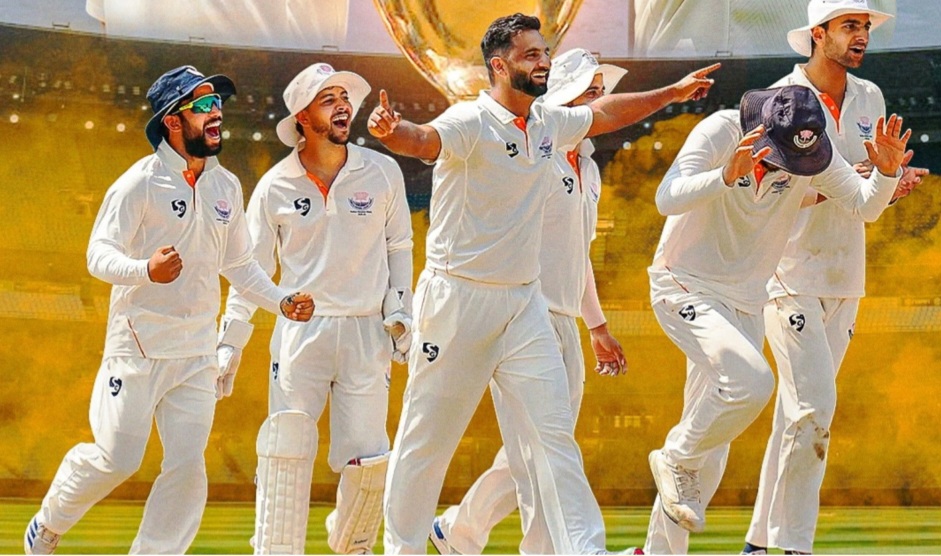
In the years that followed, several initiatives aimed at strengthening cricket in the region began to take shape. Former India all-rounder Irfan Pathan joined the team as a mentor ahead of the 2018–19 domestic season, working closely with young players and helping develop the team’s professional structure.
His presence brought valuable experience and helped improve training methods.
All these developments, the early struggles, the gradual rise and the emergence of new talent, ultimately set the stage for the extraordinary 2025–26 Ranji Trophy season.
Few analysts predicted that Jammu and Kashmir would challenge the tournament’s traditional powerhouses.
But match by match, the team built momentum.
Key victories in the league stage carried them into the knockout rounds, where they defeated Madhya Pradesh by 56 runs in the quarter-final.
In the semi-final, J&K stunned Bengal by chasing down a target of 126 runs, securing their first-ever appearance in the Ranji Trophy final.
For the first time in 67 years, the team from the Himalayan region stood one match away from cricketing immortality.
Waiting in the final was Karnataka, one of the most powerful cricketing states in India.
Karnataka’s cricket history is rich with legends such as Rahul Dravid, Anil Kumble and Javagal Srinath.
For Jammu and Kashmir, the matchup carried symbolic weight. It was a meeting between one of the country’s most established cricketing institutions and a team that had spent decades fighting simply to be taken seriously.
In the decisive contest, Jammu and Kashmir produced one of the most disciplined performances in the team’s history. The bowlers restricted Karnataka’s scoring opportunities and built pressure over long spells.
When J&K’s batting unit responded, they delivered an innings that secured a crucial first-innings lead, the advantage that ultimately proved decisive.
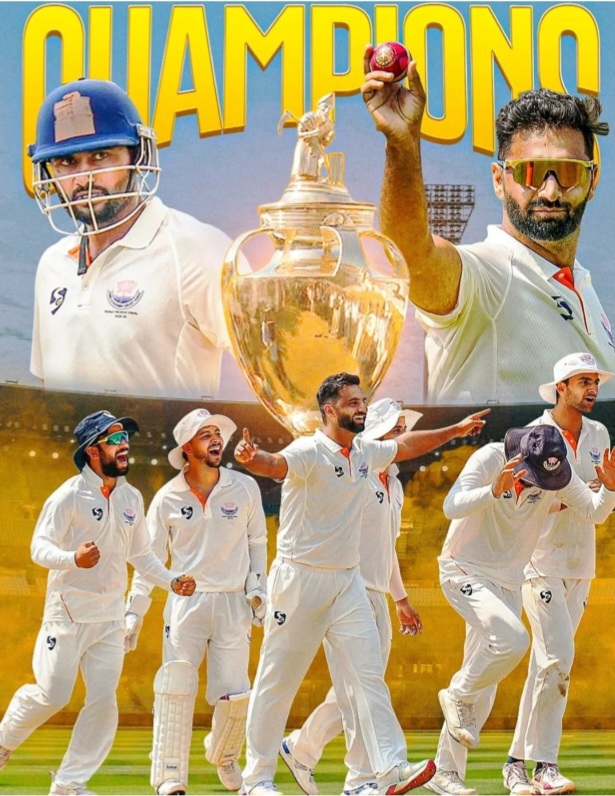
After six decades in the Ranji Trophy, the team had finally lifted the championship.
Unlike India’s major cricketing states, Jammu and Kashmir did not grow up with a dense network of clubs and academies.
Cities such as Mumbai and Delhi developed cricketing cultures through structured leagues and historic grounds. Talented players could progress step by step through competitive systems.
In Kashmir, the system evolved very differently. For much of the late twentieth century, organised cricket remained sporadic. Security restrictions frequently interrupted sporting calendars and many tournaments were postponed.
Even basic infrastructure was limited. Until recently, the region had only a handful of grounds capable of hosting high-level domestic matches.
For young players from remote districts, reaching these stadiums could take hours, sometimes days.
Yet despite these challenges, the appetite for cricket never faded.
Local tournaments across towns like Sopore, Baramulla and Anantnag continued to nurture young talent. Matches were played on makeshift pitches, often on school grounds or agricultural fields, with spectators watching from rooftops or nearby slopes.
Several members of the Ranji-winning team began their journeys in precisely these environments.
The region has also begun producing cricketers capable of competing at the national level. One of the most visible examples is Umran Malik, the fast bowler from Jammu whose raw pace earned him recognition in the Indian Premier League and eventually the national team.
His emergence demonstrated that talent from the region could thrive in India’s most competitive cricket environments.
The moment the final result was confirmed, silence inside living rooms across Jammu and Kashmir broke into celebration.
Television screens flickered in homes from Srinagar to Jammu, from towns like Anantnag and Baramulla to villages scattered across the mountains. Within minutes, social media filled with congratulatory messages. Former cricketers, politicians and journalists from across India celebrated the achievement.
But the most powerful reactions were visible on the streets.
In Srinagar, groups of young cricket fans gathered in neighbourhoods and public spaces, sharing videos of the final moments of the match. Small celebrations broke out outside local cricket clubs where players and coaches had spent years nurturing the dream that one day a team from Jammu and Kashmir could become national champions.
For many older cricket followers, the moment carried deep emotional weight.
They remembered decades when the team struggled simply to remain competitive in the Ranji Trophy. Now, suddenly, the same team stood at the summit of Indian domestic cricket.
For young cricketers across the Valley, the victory has transformed a distant dream into a visible possibility.
Sports historians often note that the greatest impact of a championship lies in the inspiration it provides to future generations. The Ranji Trophy win could become precisely such a turning point.
From the team’s first Ranji appearance in 1959 to the historic 2026 victory, generations of players carried the dream forward.
Some came close. Others struggled through seasons that seemed to offer little hope of success.
But the dream survived and on a February evening in 2026, it finally became reality.
The Ranji Trophy now belongs to Jammu and Kashmir, and the next dream has already begun in the hands of the children holding bats across the Valley.