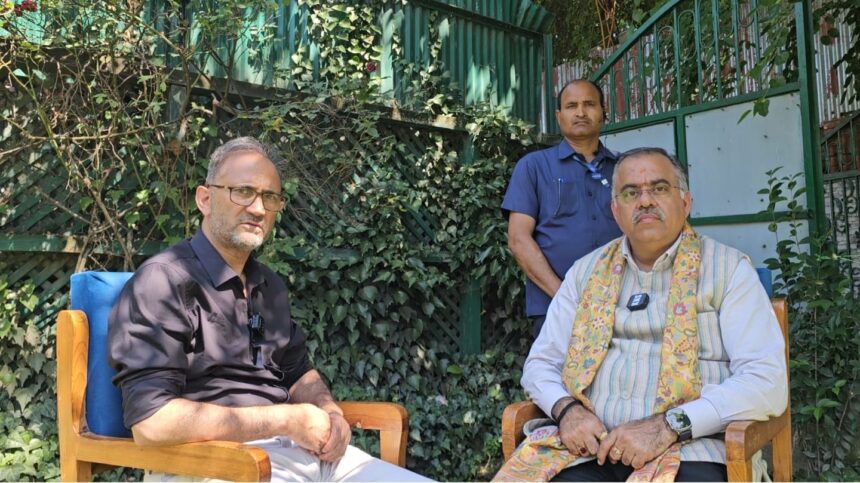
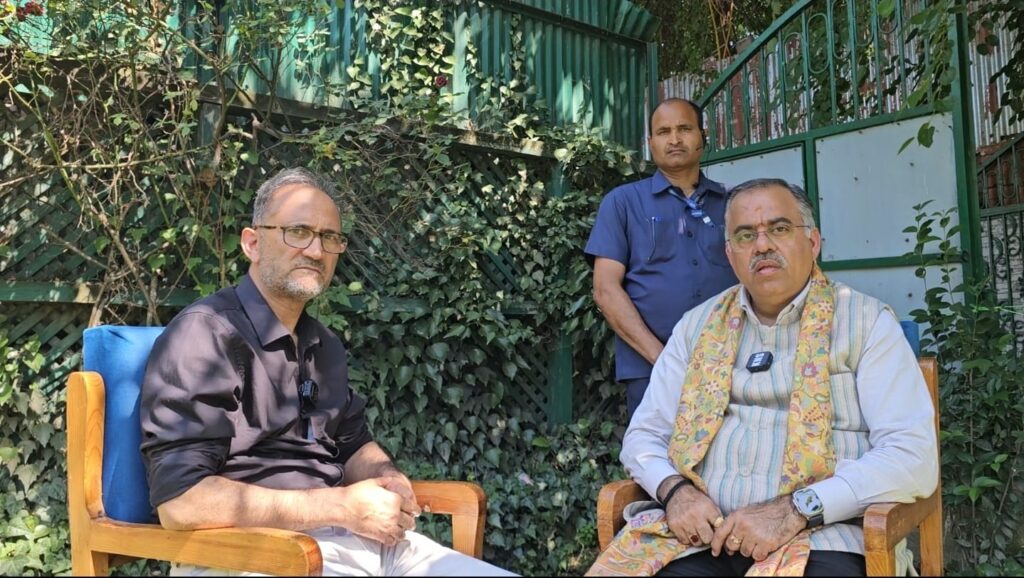
In an exclusive conversation with The Kashmir Magazine Editor M. Aslam Bhat, BJP National General Secretary and Rajya Sabha MP Tarun Chugh speaks on the Centre’s development agenda for Jammu and Kashmir, the performance of the Omar Abdullah-led government, the debate over statehood, Parliament’s role and why he believes governance not political rhetoric must remain the J&K’s foremost priority.
Excerpts
KM: First of all, congratulations on your election to the Rajya Sabha. What priorities do you carry with you as you begin this new responsibility?
Tarun Chugh: Thank you very much. For me, this responsibility is not merely a parliamentary position; it is an opportunity to represent the aspirations of the people of Jammu and Kashmir at the national level. My foremost commitment will remain to raise issues concerning the region and ensure that its developmental needs continue to receive the highest priority.
Prime Minister Narendra Modi has consistently demonstrated his commitment towards Jammu and Kashmir. The objective now is to ensure that every development initiative undertaken by the Centre reaches the people in its fullest measure.
KM: How do you assess Jammu and Kashmir’s development trajectory over the past few years?
Tarun Chugh: I believe Jammu and Kashmir is witnessing one of the most significant phases of infrastructure development in its history. Projects that remained confined to files for decades are today becoming realities. The railway network has expanded dramatically, the Chenab Rail Bridge has emerged as an engineering landmark of global significance, the Udhampur-Srinagar-Baramulla Rail Link has transformed connectivity, and strategic projects like the Zojila Tunnel are reshaping the region’s future.
Similarly, highways, educational institutions, healthcare infrastructure and tourism-related investments have all received unprecedented attention. Tourism, which briefly suffered following isolated incidents, has once again regained momentum. Visitors are returning because they have confidence in the improving infrastructure and security environment.
When one looks at the scale of investment made over the last several years, it becomes evident that a new chapter of development is being written in Jammu and Kashmir.
KM: Yet the elected government maintains that development is a collective effort involving both the Centre and the UT administration. How do you respond?
Tarun Chugh: Development should never become a matter of political ownership. The Bharatiya Janata Party has consistently supported every initiative that benefits the people of Jammu and Kashmir, irrespective of which party heads the elected government.
Whenever the Union Territory requires assistance, the Government of India has extended full cooperation. Whether a government belongs to the BJP or any other political party has never determined the Centre’s approach towards development.
Our philosophy has always been simple: if a project benefits the people, it deserves support. However, cooperation cannot substitute accountability. The elected government must also explain what it has independently achieved during nearly two years in office.
KM: You have been highly critical of the Omar Abdullah-led government. Where, in your opinion, has it fallen short?
Tarun Chugh: Governments are elected on the basis of promises. People have every right to ask whether those promises have been fulfilled. Today, ordinary citizens continue asking basic questions. When will roads improve? When will drinking water become more reliable? What progress has been made in healthcare? Where are the employment opportunities that were promised? What happened to the welfare commitments announced during the election campaign?
Instead of answering these questions, the government repeatedly attempts to shift the discussion towards Delhi. My submission is straightforward. Before questioning others, first present your own report card. Tell the people what tangible work has been completed over the past two years. Which major development initiative has originated from the elected government itself?
These are legitimate questions that deserve equally legitimate answers.
KM: The Omar Abdullah-led government says many of its powers are limited under the present constitutional arrangement. Do you believe that is a valid explanation?
Tarun Chugh: Every government functions within a constitutional framework, and everyone understands that. But constitutional arrangements cannot become a permanent excuse for the absence of governance.
The elected government has almost every department that directly affects people’s daily lives, health, education, finance, public works, agriculture, commerce and several others. These are the departments through which governments are judged.
People are asking simple questions. What has improved in healthcare? How many new hospitals or dispensaries have been established? What has been done to strengthen schools, improve roads, create employment or enhance public services?
Instead of providing answers, the government repeatedly shifts the political debate elsewhere.
Governments are elected to deliver results, not explanations.
KM: The National Conference maintains that restoring statehood remains its foremost priority and has announced programmes in Delhi to press for its restoration. How do you view that campaign?
Tarun Chugh: The Bharatiya Janata Party has never opposed development or democratic aspirations for Jammu and Kashmir. However, politics should not become a substitute for governance.
If the government wishes to raise the issue of statehood, it is free to do so. But before asking people to support another political campaign, it should first explain what it has achieved in nearly two years in office.
People voted expecting improvements in governance, employment, healthcare, roads and public services.
They deserve an account of that performance.
My question is simple: where is the government’s report card?
KM: There is also political speculation that the National Conference and the BJP maintain an understanding behind the scenes. What is your response?
Tarun Chugh: Such allegations are politically motivated and have no basis.
The BJP’s position has always been consistent.
Wherever the people of Jammu and Kashmir require assistance, the Government of India will extend full support. That support is given irrespective of which political party heads the elected government.
Development is not conditional upon political affiliation.
Whether the government belongs to the BJP, the National Conference or any other party, the Centre’s responsibility towards the people remains unchanged.
We support development, not governments. There is an important difference between the two.
KM: Your critics argue that the BJP is more interested in political expansion than strengthening democratic institutions in Jammu and Kashmir.
Tarun Chugh: Absolutely not.
Our objective is not to weaken or strengthen any political party but to strengthen Jammu and Kashmir. Political competition is decided by the people through elections. Governments come and go but development must continue irrespective of political circumstances. That has been Prime Minister Narendra Modi’s approach from the beginning. Every infrastructure project, every welfare initiative and every investment made in Jammu and Kashmir reflects that commitment.
KM: You have repeatedly referred to development. What, according to you, distinguishes the Modi government’s approach?
Tarun Chugh: The difference lies in execution. For decades, people heard announcements. Today, they are seeing implementation. Take connectivity. The railway network connecting Kashmir with the rest of the country is no longer a distant dream. The Chenab Rail Bridge has become an engineering achievement recognised internationally. The Zojila Tunnel is progressing. National highways are expanding. Medical colleges, educational institutions and tourism infrastructure have all received unprecedented attention.
Development is visible. People can physically see these projects taking shape. That is the biggest difference.
KM: Yet unemployment continues to remain one of the biggest concerns among young people.
Tarun Chugh: Employment is undoubtedly one of the most important challenges before every government. That is precisely why infrastructure development matters. When connectivity improves, investment follows. When investment increases, industries expand. When industries expand, employment opportunities are created.
No government can generate sustainable employment merely through announcements. Employment requires economic activity, investment and confidence.
The Central Government has attempted to create that foundation. The responsibility now also lies with the elected government to create a business-friendly environment, encourage entrepreneurship and ensure that investment translates into jobs for local youth.
KM: You have now entered the Rajya Sabha. What role do you see for yourself in Parliament, particularly with regard to J&K?
Tarun Chugh: Parliament is the highest democratic institution of the country, and I consider it both an honour and a responsibility to represent the concerns of Jammu and Kashmir there.
The BJP already has capable representatives from the Union Territory in both Houses of Parliament. My responsibility is to complement those efforts and ensure that issues concerning Jammu and Kashmir continue receiving national attention.
Whether it concerns infrastructure, investment, tourism, education, employment or public welfare, my endeavour will be to consistently raise these matters and facilitate greater support from the Government of India.
Representation should ultimately be measured not by speeches but by outcomes that improve the lives of ordinary people.
KM: Opposition parties argue that people on the ground remain dissatisfied despite the Centre’s claims of development. How do you respond to that perception?
Tarun Chugh: Every democracy has differing political opinions, and that is perfectly healthy.
However, if one objectively examines the transformation taking place in Jammu and Kashmir, the scale of development is evident.
Road connectivity has improved significantly. Railway infrastructure has reached a historic milestone. Major tunnels, highways, educational institutions and healthcare facilities are under construction or have already been completed. Tourism, which is one of the region’s economic lifelines, has also witnessed substantial government support.
Of course, challenges remain. No responsible government can claim that every problem has been solved. But the direction of progress is unmistakable. Development is a continuous process, not a destination.
KM: If you had to give one message to the Omar Abdullah-led government, what would it be?
Tarun Chugh: My advice would be very simple. Focus on governance. The people elected the government with expectations, and they deserve visible results.
Political debates will continue. Elections will come and go. But governance cannot wait. People want better healthcare, improved roads, employment opportunities, reliable public services and economic growth.
If the government concentrates its energy on fulfilling those expectations, the people themselves will acknowledge its work. That, in my opinion, should remain the foremost priority.
KM: Finally, what message would you like to give to the people of J&K?
Tarun Chugh: Jammu and Kashmir occupies a unique place in India’s history, culture and future. The region possesses extraordinary potential in tourism, horticulture, education, entrepreneurship and human talent. I would urge the people, particularly the younger generation, to participate actively in this journey of development.
The Central Government remains committed to ensuring that Jammu and Kashmir receives every opportunity for growth and prosperity. Prime Minister Narendra Modi has repeatedly emphasised that development should reach every citizen without discrimination.
I believe the coming years offer an opportunity to build a stronger, more prosperous and more confident Jammu and Kashmir. That objective should rise above political differences.
Ultimately, every stakeholder, whether in government or opposition, should work towards the same goal: improving the lives of the people.
KM: Thank you for having us
Tarun Chugh: Thank you