Syed Imtiyaz
Deep in the forested highlands of Langate, where seasonal migration defines life for the Gujjar and Bakarwal communities, access to healthcare often remains dictated by geography rather than necessity. With villages scattered across difficult terrain and healthcare institutions located miles away, routine medical consultations frequently become a luxury rather than a basic service.
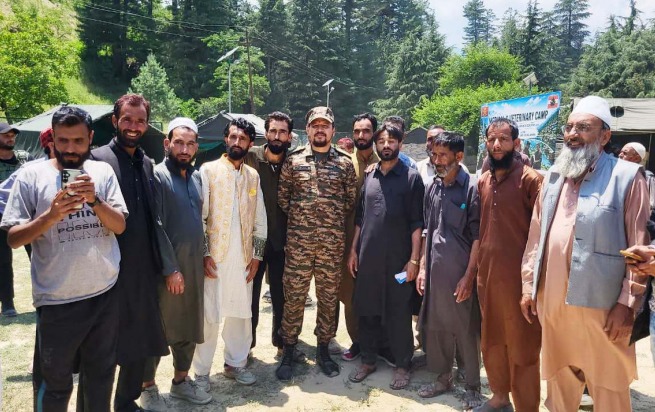
Against this backdrop, an Indian Army-organised Medical-cum-Veterinary Camp at Manabal under the Gujjar and Bakarwal Outreach Programme 2026 brought essential healthcare directly to some of North Kashmir’s most underserved populations.
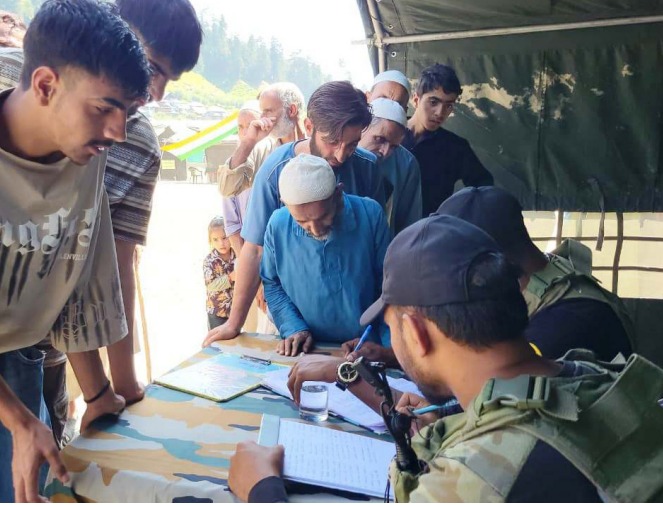
The day-long outreach witnessed nearly 600 residents availing free medical consultations, health screenings and medicines, while close to 100 livestock received veterinary treatment, highlighting the intertwined well-being of pastoral families and the animals that sustain their livelihoods.
A joint team of Army and civil doctors attended to patients across all age groups, providing treatment for common ailments while also focusing on preventive healthcare. Alongside medical consultations, doctors conducted awareness sessions on maternal and child health, seasonal illnesses, nutrition, hygiene, sanitation and the importance of safe drinking water—subjects that continue to hold particular significance in remote mountainous regions where access to healthcare information is often limited.
Running parallel to the medical camp was a veterinary outreach led by an Army-supported government veterinary doctor. Livestock, the economic backbone of Gujjar and Bakarwal households, underwent health examinations and received medicines, vaccinations and nutritional guidance. Owners were also counselled on disease prevention and improved animal husbandry practices, recognising that healthier livestock directly translates into stronger household incomes and greater economic resilience.
For the nomadic communities of Jammu and Kashmir, healthcare extends beyond human welfare alone. Livestock forms the foundation of their traditional pastoral economy, making veterinary care an equally vital public service. By addressing both dimensions simultaneously, the outreach acknowledged the unique socio-economic realities of these communities.
Residents welcomed the initiative, describing it as a much-needed intervention in an area where specialised healthcare facilities remain difficult to access. Beyond treatment, the camp reinforced the importance of preventive healthcare, early diagnosis and community engagement.
While a single outreach cannot substitute permanent healthcare infrastructure, such initiatives bridge an important gap for populations living on the geographical margins. In regions where terrain often dictates opportunity, taking healthcare directly to the people remains one of the most effective ways of ensuring that distance does not become a barrier to dignity, well-being and development.