Srinagar, Feb 05 : The livestock and fisheries sectors in Jammu and Kashmir have recorded steady progress towards sustainable growth, food security and livelihood generation, supported by government interventions under programmes including the Holistic Agriculture Development Programme (HADP), according to official data.
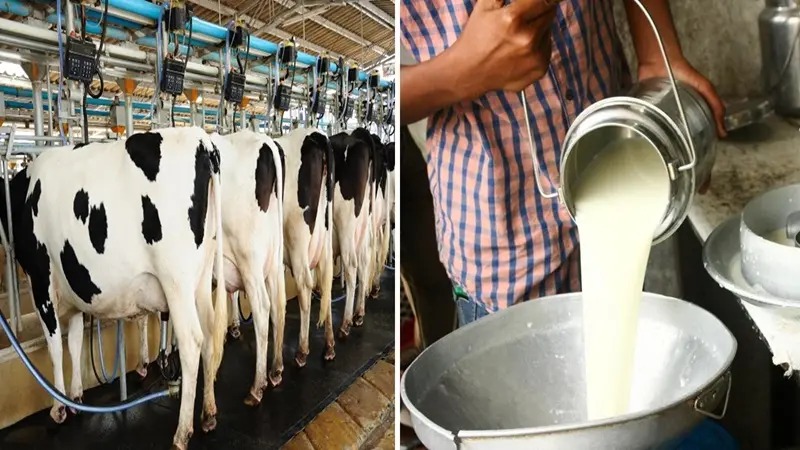
In the dairy sector, milk production reached 3,177.38 thousand metric tonnes (Th MTs) in 2024–25, while production stood at 2,108.45 Th MTs up to November 2025.
The government has set a target of 3,300 Th MTs by March 2026. Artificial insemination coverage has expanded from 30 per cent to a targeted 70 per cent, while semen production capacity increased from nine lakh to 19.5 lakh straws.
Import of high genetic-merit breeding bulls and adoption of advanced breeding technologies have been undertaken to improve cattle productivity.
To strengthen the organised dairy sector, a 50,000 litres-per-day UHT milk processing plant was commissioned at Jammu during 2025–26 under the National Programme for Dairy Development (NPDD).
The poultry sector recorded the establishment of 502 units up to November 2025, including those supported under HADP.
Initiatives focused on infrastructure development, promotion of specialised layer breeds, feed manufacturing and reducing dependence on imported day-old chicks. The sector aims to increase its gross output from Rs 709 crore to Rs 1,982 crore.
In the sheep and goat sector, 2,150 units were established up to November 2025. To enhance mutton production, 2,700 elite breeds were planned for import, of which 900 Dorper and Texel breeds have already been introduced.
Fodder development initiatives under HADP aim to reduce fodder deficiency from 41 per cent to 8 per cent through hydroponic fodder production and fodder depots.
The fisheries sector achieved fish production of 29.40 Th MTs in 2024–25 and 21,680 metric tonnes up to November 2025, with trout farming emerging as a major contributor.
Future plans include modernisation of hatcheries, improved post-harvest management and adoption of advanced aquaculture technologies such as Recirculating Aquaculture Systems and Bio-floc systems to enhance productivity.
Veterinary healthcare remained a focus area, with around 2,000 veterinary facilities operating across the Union Territory. In 2024–25, about 10.08 lakh artificial inseminations were conducted, while 6.97 lakh were completed during 2025–26 up to November. Mobile Veterinary Units were deployed to strengthen disease surveillance and outreach in remote areas.
The sericulture sector continues to support about 27,000 families, producing nearly 800 metric tonnes of bivoltine cocoons annually, providing short-gestation livelihood opportunities with significant participation of women.(KNS).