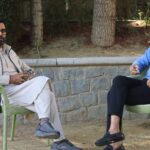
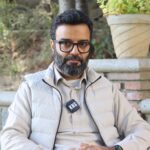
In a candid chat with Kashmir Magazine editor Mohd Aslam Bhat, MP Srinagar Agha Ruhulla opens up on the challenges of political accountability, the tension between party loyalty and public duty, and the long-term struggle to safeguard the rights and identity of Jammu & Kashmir
Excerpts
KM: Thank you for speaking with us. You have repeatedly described your struggle as issue-based rather than personal. What does that mean today and why has the issue-based stance left you feeling isolated?
Agha Ruhulla: Thank you. Let me be plain: my fight has always been issue-driven. It is rooted in the commitments we made to people to restore rights, to protect identity, to ensure that institutions work for citizens. When I say I feel alone, it is not out of bitterness but out of realism. We wanted an institutional, democratic confrontation not violence, not theatrics but a persistent, principled push through constitutional and parliamentary channels. We expected that a like-minded team would form to take the fight forward. Instead, from very early on, the approach softened and the direction became unclear. People voted for responsibility and a fight for rights. They did not vote for mere routine governance masquerading as progress. If those who hold office do not show the intention to pursue the agenda they promised, the public rightly questions them and asks whether resignation is the answer. If not now, then perhaps tomorrow.
KM: When you say the government “softened,” what exactly do you mean?
Agha Ruhulla: The language, optics, posture everything that signals resolve, all softened. We campaigned against certain central policies; the electorate voted against them because they wanted principled resistance. But governance isn’t just about managing daily affairs; it is also about defending the rights and identity of the people who entrusted you with a mandate. From day two, the approach seemed calibrated to avoid confrontation with the center. That’s the problem. For many citizens, that softness equals capitulation. If the government lacks the willingness to fight even if the fight’s outcome is not entirely within its hands then the people will be disappointed. They asked us to keep the issue alive institutionally. They didn’t ask for instant results. They asked for sustained, principled advocacy. That’s what I continue to press for.

KM: You’ve been very vocal about reservations, students’ concerns and other localized issues. Some critics say your statements look contradictory at times that you alternately confront the party and then appear to back down. How do you respond?
Agha Ruhulla: My positions are consistent; any apparent contradiction stems from how people interpret process versus intention. Confrontation, for me, is an institutional tool not a show. I can confront my party on policy or approach while still working within party channels. Reservation is one part of a larger agenda tied to rights and protections. The complaint isn’t just about a single demand; it’s about whether the promise made to the electorate is being implemented with intent. Committees were formed; reports were prepared; files were sent to the law department. Yet action hasn’t followed quickly enough. I met students, I met panels, I kept the issue alive publicly and privately. My critique is aimed at the delay in execution and the lack of clarity about next steps. That’s not contradiction, that’s accountability.
KM: You say you’ve taken this up personally at high levels. Have you had one-on-one discussions with party leadership and the chief minister?
Agha Ruhulla: Yes. I have spoken to the chief minister and met party leadership on several occasions. I raised these matters privately and formally in party meetings; this is on record. At times, I have pushed for clarity on intent. But beyond a certain point, if the political appetite to wage this struggle institutionally is missing, there’s little more an individual can do. I have tried dialogues, informal outreach, and formal representations. I expected a team-based response, given the mandate we were given from five districts. We campaigned thinking there would be a broad-based effort. That did not fully materialize. I do not want to fight alone; I never wished that. But when the question of principle versus convenience comes up, I will not compromise on principles.
KM: There’s a recurring theme in your remarks: the tension between “numbers” and “principles.” Could you unpack that for us? What exactly do you mean when you ask whether the party is about ideology or arithmetic?
KM: Parties are built on platforms, on ideology and commitments to the people. When those principles matter, the party is defined by them. When numbers take precedence, ideology fades. If the National Conference today measures itself primarily by numbers, who is inside, who commands loyalty, then we’ve lost sight of the reasons people trusted us. If our agenda is to secure the rights and identity of Jammu & Kashmir, and if some within the party no longer believe in that, they should be honest and step aside. Political ethics demand that the language used before elections matches the actions after. Using a certain rhetoric to win votes and then abandoning it is morally wrong. That’s not just a political disagreement, that’s betrayal.

KM: That’s a strong critique. You’ve said that if the party has abandoned its ideology, you could resign today. Are you prepared to take such a step?
Agha Ruhulla: I have said, and I repeat: if the party no longer stands for its declared principles, if it has no commitment, no ideology, no truth then I am prepared to walk away. That’s not a threat; that’s an ethical stance. If the party’s identity is merely an instrument for securing office, then it loses moral content. I would rather step aside than remain part of a hollow platform. But resignation is not my first objective; persuasion and principled struggle are. If colleagues re-align with the original agenda and act decisively, there will be no question of leaving. My point is simple: either we are faithful to the ideology and fight for it, or the party must be honest about its priorities.
KM: Let’s talk about the strategic dimension. You’ve spoken about needing allies in Parliament to push for statehood and protections. How do you view the role of national parties like Congress in this struggle?
Agha Ruhulla: To press for the restoration of statehood or a comprehensive package of protections, Parliament is the theatre where this fight must be waged. That requires numbers and numbers come from national-level allies. I am not advocating for any party as an end in itself; I am arguing that to secure protections and rights, we need alliances with like-minded parties in the centre. If the logic of the fight is about reclaiming status, safeguards and constitutional guarantees, we must look at those who can deliver influence at the national level. For that reason, engagement with parties like Congress is pragmatic: they are a force in the parliamentary arithmetic that can help build a favorable configuration. It’s strategic realism, not ideological surrender.
KM: There are reports of Congress’s displeasure over the Rajya Sabha announcements. What is your take on the NC-Congress relationship?
Agha Ruhulla: We have already burnt the bridge with Congress. Under the current circumstances, we do not see Congress as a necessary ally in Kashmir. If the situation were normal, we would not need them. A strong political force is required in Parliament to advance Jammu and Kashmir’s political struggle, and that force is not the BJP, it is the party that stands against BJP’s ideology.
KM: How do you assess the National Conference’s approach toward its political allies and BJP?
Agha Ruhulla: The National Conference knows where partnerships are necessary and where they are not. Where we do not need them, we have burnt the bridges; where we need them, we cannot expect much. Over the past year, people have seen that we are softening our approach toward the BJP while simultaneously burning bridges with potential allies who could have supported our political fight in the future.
KM: You spoke of the optics around the statehood question and the government’s approach to it. How should the government be positioning itself?
Agha Ruhulla: If statehood is the stated objective, the government must fight for the entire package of protections and rights that historically accompanied our status not only for a slogan on a banner. That means active engagement in Parliament, cultivating alliances, sustained legal and political campaigns, and showing that the centre cannot ignore constitutional norms. It also means demonstrating to the public, within a short time frame, a clear and palpable strategy. Promises without visible action breed frustration. We must be deliberate in our actions; rhetoric alone will not restore trust.
KM: Some party colleagues have suggested you might be politically isolated that your victories depended on the party platform. Does that narrative bother you?
Agha Ruhulla: I don’t dwell on such statements. I won the confidence of people because they trusted the promise. If some within the party now suggest that the platform was necessary merely to secure my victory, that is their calculation. My concern is larger than personal validation. It is about whether the party remains true to its obligations. Before the election, we spoke an unmistakable language to the electorate. That language must remain the blueprint for action. If some leaders find that inconvenient today, they should be honest and recalibrate. It is ethically unconscionable to change the message once power is attained.
KM: Some perceive your stance as a personal crusade. How would you respond to that charge?
Agha Ruhulla: It is not a personal crusade. It is a public duty. I was elected to represent aspirations, to keep promises, and to defend rights. If standing up for these commitments appears to some as a lone crusade, then I accept that label but only insofar as ‘lone’ means unwavering. I have the duty to challenge any drift away from principles, whether inside my party or externally. The measure of political leadership is not in personal comfort but in the courage to hold the line.
KM: Several times you’ve said you are not suffocated or cornered, but you feel betrayed by actions or inaction of colleagues. How do you cope with that politically and personally?
Agha Ruhulla: Betrayal is not a comfortable feeling. But my concern is not personal; it is collective. I channel that disappointment into public engagement: meeting constituents, students, party workers, civil society, and colleagues who remain committed. Politically, I continue to press the case within party forums and in public. I maintain dialogue with allies in the Centre. Personally, I am motivated by the obligation to those who entrusted me with the mandate, their expectations are the engine of perseverance.
KM: Looking ahead, what would you regard as success for the next year? What would you ask party leadership to do to reassure you and the public?
Agha Ruhulla: Success would be clear, visible action on the agenda we promised: timely progress on reservation and student concerns; a defined plan and active engagement in Parliament on statehood and rights; and demonstrable steps taken to protect our cultural and political identity. I would ask the leadership to be transparent about intent, to bring pending reports and decisions to a conclusion, to demonstrate unity of purpose, and to visibly ally with like-minded parties in the Centre where necessary. Words alone are insufficient; we need concrete, time-bound measures that show the electorate their trust was well-placed.
KM: You’ve said you do not want to leave the party, but remain principled. If a definitive answer from party leadership does not come, what then?
Agha Ruhulla: I have been consistent: I will stay if the party stays true to its commitments. If the party’s leadership no longer aligns with those principles and refuses to act, then I have said what I will do. But I’d prefer unity of purpose rather than rupture. My hope is that colleagues will align with the agenda they took to the people. If not, they must answer to the electorate.
KM: Given the upcoming Budgam bypolls, will you campaign for the National Conference candidate?
Agha Ruhulla: No, under the current circumstances, I cannot campaign. My engagement with voters has always been guided by principles, ideology, and commitment, not by party pressure. I have always worked for the institution I represent and for the people who trusted me with their votes. Since promises and commitments from the last Assembly tenure have not been fulfilled, I see no reason to go in front of the people. Only when I see concrete action on critical issues like Cabinet decisions on reservation and other prior commitments will I consider participating in a campaign. Until then, I will stand by my principles and work directly with the people.
KM: What is your stance on voters and their autonomy in this by-election?
Agha Ruhulla: The people are the true owners of their votes. I will exercise my vote independently and will advise only if asked. I will not dictate or influence the decisions of voters. My responsibility is to uphold the commitments I made to the people and follow the principles of politics, ideology, and accountability. I will act according to my conscience and commitment to the people, ensuring that my actions remain principled rather than politically expedient.
KM: In closing, what would you say to the voters who entrusted you with this mandate?
Agha Ruhulla: I would say this: your trust guides my actions. I do not equate political convenience with public duty. I will persist in demanding institutional, democratic action to restore rights and protect identity. I call on fellow leaders to decide whether they stand for principles or for numbers, because the people expect clarity. I remain on record available, accountable, and resolute and I will not be silent when promises are at stake.