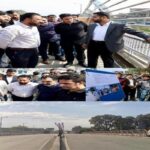
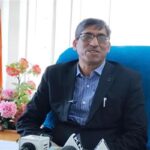
In a candid conversation with Kashmir Magazine Correspondent Aaqib Khan, Syed Qamar Sajad, Director Tourism Kashmir and Managing Director of the J&K Cable Car Corporation, opens up on the Valley’s tourism rebound, the return of traveller confidence, and the balancing act between footfall, safety, ecology and infrastructure.
Excerpts
KM: There was a sudden rise in tourism after the recession. How did this movement pick up so fast?
SQS: After the recession, suddenly the tourism movement gathered momentum and brought a large number of tourists. In the last six months, the Tourism Department and stakeholders worked continuously on confidence building across the country and at international levels. The result is that tourists from all segments whether local, non-local, and foreign have regained trust and started traveling to the Valley again. The rebuilding of confidence has impressed tourists across the nation and the globe.
KM: You mentioned stakeholders many times. Who exactly are the stakeholders driving this recovery?
SQS: Tourism here is not a single-department activity. It is a full ecosystem. The stakeholders include the Tourism Department, hotel and hospitality associations, hoteliers, transport and taxi unions, local guides, photographers, sledge and snow scooter operators, pony walas, ski and snow gear rental providers, adventure tourism operators, market vendors, artisans, small shop owners, helpers at gondola mid-stations, food kiosks, last-mile tourism workers, and all those providing services directly to tourists. When tourism moves, the entire stakeholder economy moves with it.
KM: So this recovery is not only because of government campaigns, but also because of public and private coordination?

SQS: Yes, the recovery is structural. The Tourism Department, hotel industry, and local service providers coordinated together for months. The hotel associations improved hospitality, service providers ensured last-mile support, and national and international outreach created a renewed perception of safety and attraction. Stakeholders have started showing strong results on the ground.
KM: Kashmir has always been a tourist place. But how do you explain the relationship between Kashmir and tourism in a historical sense?
SQS: Kashmir’s tourism bond is centuries old. It is not a one-year or two-year relationship. Even before modern tourism infrastructure existed, Kashmir was known for cultural exchange, hospitality, spirituality, travel, and trade. People here already had a good relationship with the outside world through education, business, culture, and migration. Our bond with tourism is very old and deeply rooted.
KM: You said confidence deficit never really existed in Kashmiris. Can you explain that?
SQS: The people of Kashmir already have inherited confidence in dealing with the outside world. Whether we talk about the country or foreign countries, confidence was already present. There was a temporary jolt due to recession, but the rebuilding phase has effectively impressed tourists across the country and globe. Confidence was rebuilt, it was not created from zero.
KM: How much has nature played a role in this revival, especially snowfall?
SQS: Nature played a very strong and positive role. Snowfall created excitement among tourists and triggered bookings, market movement, ski inquiries, gondola ridership, sledge activity, and winter travel momentum. Kashmir turned very attractive this winter. Nature has supported us positively and strongly.
KM: You described Kashmir as a bride. Is this sentiment reflecting the tourist perception?
SQS: Yes, it reflects how the Valley looks and how tourists are feeling right now. The snow has made the Valley beautiful, serene, and attractive. This has also helped hesitant tourists regain interest. The whole Valley is looking like a bride, very beautiful and renewed.
KM: Is the present tourist rush really comparable to April 2025? Not less, not more?
SQS: Yes, exactly the same in scale. The market movement, inquiries, footfall, and tourist excitement today mirrors April 2025, which was one of the peak arrival periods. The current tourist movement is matching the same graph we saw in April.
KM: What do you mean when you say tourism is ‘back to normal’?

SQS: By back to normal, I mean that tourism has returned to its natural rhythm, confidence levels, and movement scale. Instead of digging data deeply, I can simply say tourism is back on track and normalcy is restored. We are back on the track of tourism normalcy.
KM: You also mentioned that the tourism industry is not reliant enough on infrastructure and needs strengthening. What did you mean by that?
SQS: Tourism infrastructure needs to be strengthened further. The Valley accommodates tourists of all categories, but to improve comfort, we must upgrade facilities, infrastructure, accommodation clusters, shelter points, hygiene systems, and service delivery standards. We must strengthen infrastructure while preserving ecology.
KM: Some tourists say many tourist destinations are still closed. Does that affect tourism and are you pushing to open them?
SQS: Closed destinations do not mean tourism is failing. What we have available right now is already excellent and enough to attract tourists. There are still many better destinations that can open in future. As Director Tourism, I would like all destinations to open, but opening depends on security assessment, citizen safety, emergency cover, and government evaluation. We will leave the final decision to the government assessment.
KM: So closures are more a matter of government security evaluation than tourism limitations?
SQS: Yes, exactly. Government’s first priority is safety and security of citizens, including tourists who are our guests. When the government feels the security cover and emergency response is strong enough, destinations will open. Whichever destination is considered fit, will be opened sooner or later.
KM: When tourists go to Affarwat, many say they are not allowed to stay longer. Why is that?
SQS: Affarwat is at 14,000 feet altitude. The temperature is extremely low and winds can reach up to 130 kilometers per hour. The environment is harsh, very cold, and oxygen levels change quickly. Without proper facilities like washrooms and shelters, longer stays can affect health. Many tourists come from hot regions and rush upward without acclimatization. For high altitude tourism, acclimatization is mandatory. Staying longer there is not good for tourist health.
KM: But is there any security issue at Affarwat that forces this regulation?
SQS: No. There is no direct security threat at Affarwat. Regulation is done in the larger interest of tourist health, acclimatization, congestion control, wind hazard safety, emergency balance, and synchronized upward-downward movement. This regulation is not due to security threat, it is for tourist health and decongestion.
KM: How does congestion happen if tourists are allowed to stay longer?
SQS: If 1,000 to 2,000 tourists halt at the top together, they will all return at the same time, creating congestion and movement imbalance. Cable car operations must maintain upward-downward balance. If all tourists sit up, they will all come back together, affecting evacuation rhythm, crowd movement, and health safety logistics. To maintain movement rhythm and avoid congestion, regulation is mandatory.
KM: You said services at Affarwat are being upgraded. What exactly is planned?
SQS: We have already mandated upgradation of services at Affarwat. The proposals include Permanent weather-resistant shelters, High-altitude washroom facilities, Heating lounges for winter halts, Medical kiosks with oxygen readiness, Emergency rescue and first-aid teams, Better seasonal shelter grids and response system for peak footfall balance. These upgrades are part of 2026 tourism asset improvement. Service upgradation is already mandated and in process.
KM: As MD Cable Car, how many service providers are part of this system daily?
SQS: Around 700 service providers operate in the cable car ecosystem every day. They go up in regulated batches and shifts. This industry does not push people toward unemployment. Instead, it creates opportunities. This industry creates opportunities for employment, not unemployment.
KM: What is the priority for Cable Car Corporation next year?
SQS: Our aim for 2026 is asset development, environmental protection, service upgrade, raising tourist satisfaction index, ensuring health safety, decongestion, expansion of tourism assets, and improving hosting capacity for all traveller segments. Tourist satisfaction level must go a little higher in 2026.
KM: You mentioned mixed tourist capacities. How does Kashmir accommodate different economic categories?
SQS: Kashmir accommodates tourists from the highly affluent class, middle class, and even economy class. Some come by chartered helicopters and chartered flights, some by taxis, some by road travel, and some belong to the lowest economic segments. The Valley has a unique accommodation capacity to host all categories. The Valley accommodates every segment, which is its unique strength.
KM: Recently many places in Kupwara, Bandipora, Gurez were added to the tourism map. What is being done to strengthen them?
SQS: Yes, many new destinations have been added to the tourism map. Our focus is Infrastructure development, Road access coordination, Home-stay onboarding, Eco-tourism regulation, Winter tourism clusters, Promotion of border scenic corridors, Better accommodation tie-ups and cleanliness outsourcing and monitoring. The aim is to make every destination ready for responsible tourism.
KM: What is your environmental policy approach for Gulmarg and other destinations?
SQS: We have already adopted cleanliness outsourcing. Gulmarg Cable Car Corporation takes care of its own destination’s cleanliness. Polythene must be banned and needs a pragmatic, phased, and community-linked approach. Clean environment is essential for sustainable tourism.
KM: When you said ‘both governments supported us,’ which governments were you referring to?
SQS: I take both governments on a large canvas, whether central government, UT government, or administration, the goal is the same: serve the people. In tourism, we don’t see where a tourist comes from. We see the relationship between the host and the guest. Tourism is about hospitality, comfort, and responsible hosting.
KM: What message would you like to send to tourists coming to Kashmir now?
SQS: Kashmir is a peaceful and attractive destination. Government regulation is in tourist interest. The snow, the ecology, the infrastructure, the culture, the gardens, the valleys, all are enough to attract the world. My request is simple, come and see peace for yourself. Come and witness the real meaning of peace.
KM: Are you satisfied with the current tourism normalcy and revival graph?
SQS: Yes, I am fully satisfied. Nature supported us, stakeholders supported us, the system supported us, and tourists supported us. There are gaps, but we are improving them. We are moving forward strongly despite loopholes.
KM: Thank You for having us