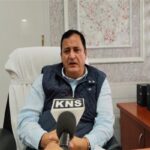
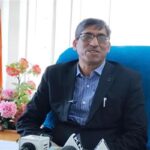
In a candid interaction with Kashmir Magazine Editor Mohd Aslam Bhat, Cabinet Minister Javed Ahmed Rana speaks about governing Jammu and Kashmir as UT, the politics of statehood, regional development concerns, and ongoing administrative reforms across his key departments
Excerpts
KM: Thank you for joining us. Let me begin by asking: how do you assess the current political situation in Jammu and Kashmir?
JR: If we begin to discuss this in depth, it can easily turn into a long debate. Still, some things need to be said clearly. After 2014, a political government was formed in Jammu and Kashmir. The National Conference was given a strong mandate by the people. Now, when the mandate is large, governance should reflect that strength. Unfortunately, on August 5, 2019, the status of Jammu and Kashmir was downgraded in what we believe was an unlawful and illegal manner. The people of Jammu and Kashmir were not consulted. Their representatives were not consulted. Members of Parliament were effectively rendered irrelevant overnight. The state was divided and reduced to a Union Territory.

KM: You are now governing under a Union Territory framework. How does that affect governance?
JR: The Union Territory system operates under a different power structure. The elected government does not possess the authority that a full state government should have. This is not an abstract issue. These limitations directly affect the people. Development suffers. Youth suffer. Decision-making becomes fragmented. The balance that should exist in a democratic system is missing. There is a dual power structure. And in that structure, it is the common people especially the youth who bear the burden.
KM: Despite these constraints, the government is functioning. How do you see that responsibility?
JR: Whatever powers are available within the Union Territory framework, the government is using them. We have no hesitation in saying that. We are working round the clock to serve the people. But let us be clear: calling this arrangement “normal” would be incorrect. It is not a full Union Territory in practice, nor is it a state. It is an arrangement where the elected government has responsibility without authority. Still, keeping these limitations in mind, we are discharging our duties.
KM: You mentioned the National Conference’s mandate. People gave you strong support. What did that mandate represent?
JR: The mandate was not merely electoral arithmetic. It was emotional, political, and historical. People supported the National Conference because they believed that this party would raise the issue of dignity, identity, and the status of Jammu and Kashmir. That belief did not emerge overnight. Despite conspiracies, pressure, and attempts to weaken democratic forces, people stood by us. They understood what was happening. They saw through it. That is why the mandate was strong.
KM: Do you feel that mandate could have been used better?
JR: I have said this earlier, and I repeat it honestly. Had Jammu and Kashmir retained full statehood, that mandate could have been used more effectively. When you have authority, you can translate mandate into policy. When authority is diluted, even the strongest mandate faces limits.
KM: You have spoken strongly against arguments for further division, particularly demands for separate statehood for Jammu.
JR: Yes, because these arguments are contradictory. On one hand, some say Jammu and Kashmir was a Dogra state. On the other hand, they argue for carving out Jammu as a separate entity. You cannot claim history selectively. Jammu and Kashmir has always been a composite entity with Jammu, Kashmir, Pir Panjal, Chenab. If you remove these linkages, what remains? These demands are driven by political convenience, not logic.
KM: What about governance and law enforcement under limited powers?

JR: Without full authority, controlling the system becomes difficult. You do not have full administrative control. You do not have institutional command. Yet expectations remain high. Despite this, we are doing what falls within our jurisdiction, whether in development, governance, or court-related matters. That itself is not insignificant under the present arrangement.
KM: You mentioned Jammu’s aspirations. How do you see them?
JR: People in Jammu also want statehood. That demand is legitimate. What is unfortunate is when that aspiration is diverted into arguments for fragmentation rather than restoration of the full state of Jammu and Kashmir. Morality demands consistency. If statehood was wrongfully taken, it should be restored fully, not partially.
KM: Your critics say this rhetoric delays governance.
JR: That is incorrect. Governance and political struggle are not mutually exclusive. We are governing within our powers. Simultaneously, we are asserting political rights. The people understand this balance. They are aware of constraints. They are not unrealistic.
KM: How do you define the road ahead?
JR: With patience and persistence.
We will not compromise on the dignity of Jammu and Kashmir. We will not abandon the demand for restoration of statehood. At the same time, we will continue to serve the people within the framework that exists today. This is not surrender. This is responsible politics.
KM: You spoke about limitations of authority. People often ask if powers are limited, how effective can governance really be?
JR: That is a genuine question. The reality is that we do not have full authority. Many decisions are not under our control because of the dual power system. When authority is divided, implementation becomes difficult. That is the truth. We cannot deny it. But I will also say this: despite these constraints, the system is running. The Chief Minister and the elected government are managing governance responsibly within the available framework.
KM: Do you think people are satisfied with this explanation — that the government is doing what it can within limits?
JR: People are not unaware. They understand the situation. They know that this is not a full-fledged state system. They also know that certain decisions are beyond the elected government’s control. That said, people judge us on what we deliver within our jurisdiction and on that front, we are working.
KM: There are allegations that development is uneven that certain regions are favoured over others. How do you respond?
JR: I reject that perception. Development work is happening across all regions, Pir Panjal, Chenab Valley, Jammu, and Kashmir. Large projects are being implemented everywhere. Whether people choose to acknowledge this or not is a different matter. But the fact is that development activity is not confined to one region.
KM: There is also a long-standing perception that the National Conference prioritises Kashmir over Jammu.
JR: The National Conference has always stood for equality. That has been our political flag from the beginning. When Jammu and Ladakh were part of the same administrative framework, we worked everywhere. Whatever Jammu has received historically, it has been through governments led from Kashmir. Leadership has always emerged from Kashmir, but governance has not been limited to Kashmir. Whatever development Jammu has today, the National Conference has contributed to it.
KM: Some critics claim that the BJP is indirectly aligned with the National Conference, especially during elections.
JR: That allegation has no basis. We contested elections independently. Yes, there was cross-voting, and members from other parties may have supported us but that does not mean alignment. The National Conference has its own vote base. Our votes were not wasted, nor were they dependent on the BJP. So this claim does not stand.
KM: Let us move to governance. You hold key portfolios Forest, Ecology, Environment, Jal Shakti, and Tribal Affairs. There have been issues around forest rights. How are you addressing them?
JR: Yes, there has been confusion, particularly between the Forest Department and the Forest Rights Act (FRA) implementation. Earlier, the Forest Department was both implementing authority and decision-maker. That created complications. Since I hold both Forest and Tribal Affairs portfolios, I requested the Chief Minister to make the Tribal Affairs Department the nodal department for FRA. The proposal was placed before the Cabinet and approved.

KM: What difference will this change make on the ground?
JR: It will bring clarity. We are appointing coordinators at district and block levels. The objective is to process pending cases efficiently. There are many genuine claims pending under FRA. We want to resolve them in a structured and fair manner. We will also address long-standing issues between the Forest Department and FRA implementation.
KM: Reservation is another sensitive issue. Where does that stand?
JR: The issue of reservation has been handled through consultation. A Cabinet sub-committee heard all stakeholders, reserved categories as well as general categories. After listening to everyone, a report was prepared and submitted to the Cabinet. The Cabinet approved it and forwarded it to the Lieutenant Governor.
Now the matter is with the LG. It has been there for some time, and we hope it will be cleared soon.
KM: What is special about the reservation proposal?
JR: The guiding principle was that no group should feel harmed. All concerns were heard. Accommodation was planned in a way that balances competing interests. The intent was fairness nothing else.
KM: There is also speculation about Cabinet expansion. Any clarity?
JR: Cabinet expansion is entirely at the discretion of the Chief Minister. The leadership can take that decision at any time. Whether it is Dr. Farooq Sahib’s guidance or the Chief Minister’s judgment, the authority rests there.
KM: Finally, how are relations with the Congress?
JR: Relations with the Congress are good. They are good at the national level and here as well. There is coordination and mutual respect.
KM: Thank you for having us
JR: Thank you.