Sajjad Hussain
Jammu, Feb 13 ; More than 12,000 kilograms of rotten and unsafe meat has been seized and destroyed in Jammu and Kashmir during the current financial year, with the authorities admitting to shortage of technical manpower in food testing laboratories even as they asserted that adulteration is not a “generalised” phenomenon in the Union Territory.
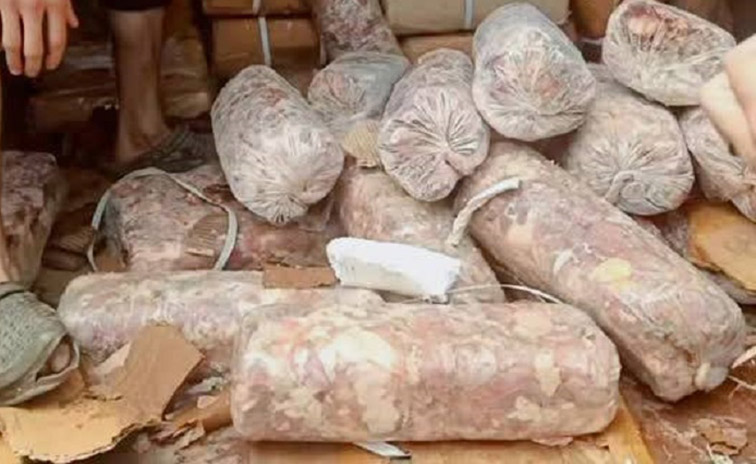
Replying to a question in the Legislative Assembly, the Health and Medical Education Department as per news agency Kashmir News Service (KNS) said over 12,183 kg of rotten meat was destroyed while another 2,139 kg was seized during the period from April to December 2025. The total value of the destroyed stock is pegged at Rs 29,19,060.
Official data shows that Srinagar district recorded the highest seizures, with 4,220 kg of rotten meat destroyed, followed by Jammu at 3,881 kg and Kupwara at 1,520.5 kg.
Seizures were also reported from Anantnag (700 kg), Ganderbal (770 kg), Pulwama (450 kg), Budgam (234 kg), Bandipora (162 kg), Baramulla (125 kg) and Shopian (121 kg).
In a separate action, the department said 7,665 kg of paneer was seized and destroyed in Jammu and Samba districts, valued at Rs 16,32,150.
The government said 1,676 inspections were carried out during the period, and 144 samples were lifted. Of these, 18 were found to be of Non-Standard Quality (NSQ).
While stating that food adulteration is not a “generalised fact”, the department admitted that incidents relating to sale and seizure of rotten or unsafe meat were reported in the Kashmir Valley during routine surveillance and special enforcement drives.
The government informed the House that J&K has two NABL-accredited Food Testing Laboratories — one each in Jammu and Srinagar — and 12 Mobile Food Testing Laboratories which are fully functional.
However, it acknowledged that both labs are grappling with acute staff shortage, with 11 out of 19 sanctioned posts lying vacant in each facility.
Samples lifted during the drives were sent for analysis to food testing laboratories within and outside J&K, including FSSAI-recognised NABL-accredited facilities, the department said as per KNS.
The government said enforcement under the Food Safety and Standards Act, 2006 is being strengthened through regular inspections, sampling, license suspension or cancellation, penalties and prosecution against violators.
“Special drives during festivals and tourist seasons, public awareness programmes and inter-departmental coordination are also being undertaken to safeguard public health,” it added. (KNS)