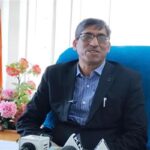
The dawn mist still clings to the chinar trees as Kashif Farooq Bhat adjusts his binoculars. His gaze sweeps across the steep, forested slopes of Dachigam, a kingdom of cedar and pine where his family’s destiny has been intertwined for generations.
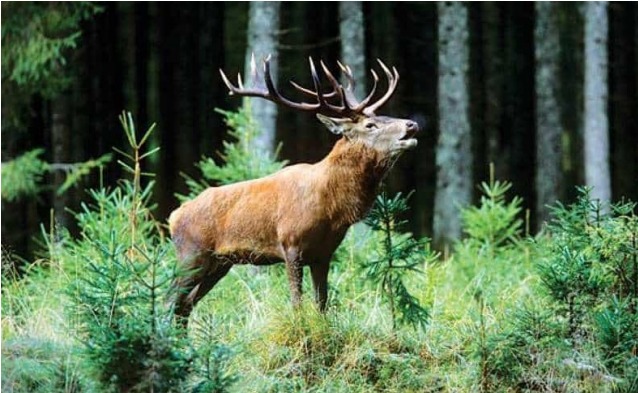
At 24, Kashif is the latest scion in a family that has dedicated itself to the protection of this land and its most famous resident. The hangul, the Kashmir stag, is a creature of profound symbolism. It is the state animal of Jammu and Kashmir, a relic of a bygone era when it roamed freely across the western Himalayas. Today, it is critically endangered, and its last stronghold is this 141-square-kilometre patch of wilderness on the outskirts of Srinagar.
“Protecting the hangul is not a job I chose; it is a legacy I inherited,” says Kashif. His paternal grandfather, Ghulam Muhi ud Din Bhat, served here until his dying day. His maternal grandfather, the late Abdul Rahman Mir, was a celebrated wildlife guard, a protector of this landscape whose dedication was honoured with the Wildlife Service Award in 2003. His father, Farooq Ahmad Bhat, has poured over three decades of his life into Dachigam as a range clerk and guard.
For this family, Dachigam is more than a national park. It is a sacred trust.
Once the exclusive hunting preserve of the Maharaja of Jammu and Kashmir, Dachigam whose name means ‘ten villages’ was established as a sanctuary before being granted the higher status of a national park in 1981. The hangul, once the prized trophy of royal shikars, is now the focus of a desperate conservation battle.
The numbers tell a grim story. Once found in the hills of Himachal Pradesh, the hangul is now confined solely to Kashmir. The last official census in 2023 put the population at a precarious 289 individuals. While a new census was completed in March 2025, the results are awaited, with conservationists cautiously optimistic that the number may have just nudged past the 300 mark. In a world of billions, the survival of a species hinges on a few hundred.
Kashif, armed with a master’s degree in wildlife sciences from Aligarh Muslim University, now leads projects for a non-profit, bringing a scientific, data-driven approach to complement his family’s generational wisdom. He represents a new hope, a bridge between traditional guardianship and modern conservation biology.
The challenges facing the hangul form a complex and relentless web. The ongoing political instability in the region has cast a long shadow over Dachigam.
“Encounters and security operations in and around the park create immense disturbance,” says Kashif. The crack of gunfire shatters the forest’s peace, disrupting feeding and breeding cycles. While direct poaching for the stag’s prized antlers and meat has declined due to stringent patrolling, it remains a lingering threat in certain pockets.
Perhaps the most persistent pressure comes from encroachment. Each year, from summer through autumn, the nomadic Bakkarwal community moves its livestock sheep, goats, and horses into the upper reaches of Dachigam. This migration brings them directly into the hangul’s critical summer habitat.
“There is a direct competition for resources,” Kashif notes. “The livestock graze on the same grasses and browse the same shrubs that the hangul depends on. This intrusion alters the stag’s natural migration patterns, forcing them into less optimal areas and increasing stress.”
Then there is the silent, insidious threat of a changing climate. Kashmir’s snowfall patterns have become erratic and diminished.
“Historically, the first heavy snows would blanket Dachigam by November or December,” Kashif says. “This snowfall was a signal for the hangul to begin its altitudinal migration, moving down from the harsh, snow-bound upper reaches to the more sheltered lower valleys for winter. Now, significant snow often doesn’t arrive until January.”
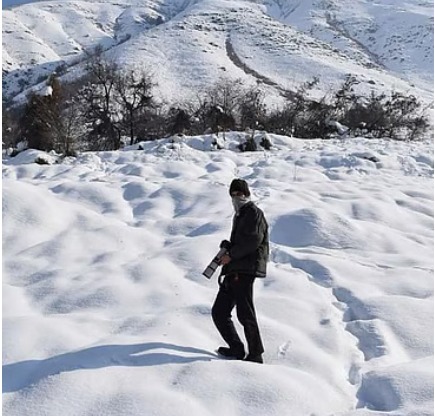
This climatic shift has scrambled the hangul’s internal calendar, delaying its seasonal movements and potentially causing a mismatch between its arrival in winter habitats and the availability of food.
The reduced snowfall also impacts the park’s hydrology. Dachigam depends on the alpine meltwater from the high-altitude Marsar and Tarsar lakes. The Dagwan River, which flows through the park’s heart, has seen a reduced flow compared to historic records, threatening water availability for all its inhabitants.
The ripple effects are felt across the ecosystem. The altered climate has also disrupted the hibernation cycles of the Asiatic black bear, leading to more frequent and fraught encounters with humans as hungry bears venture closer to villages in search of food.
In the face of these multifaceted threats, the staff of Dachigam National Park wages a quiet, determined war for conservation.
The story of Dachigam is, in many ways, the story of the Bhat family. Farooq Ahmad Bhat, Kashif’s father, has been the park’s sentinel for 31 years, a career that began after his own father passed away while in service.
His dedication has not gone unnoticed; he too has been formally recognized by the Department of Wildlife Protection for his “dedication and unwavering service.”
Now, he watches as his son picks up the mantle, armed with new tools and a broader vision. Kashif understands that the future of conservation lies not just within the park’s boundaries, but beyond them.
“Community outreach is the need of the hour,” Kashif says. He envisions programmes that build bridges with local communities, including the Bakkarwals. “We need to explore if their livestock can be vaccinated to prevent the spread of diseases to the hangul. It’s about finding a balance between human needs and wildlife survival.”
His immediate concern is the Dara conservation reserve, a corridor area where poaching remains a persistent problem. Protecting these connective tissues is essential to prevent the hangul population from becoming isolated and genetically stagnant.
The vigil that began with his grandfathers continues. The stakes have never been higher. The future of a species hangs in the balance, waiting to see if this generation’s guardianship will be enough.